

Noticias del mercado & perspectivas
Anticípate a los mercados con perspectivas de expertos, noticias y análisis técnico para guiar tus decisiones de trading.

April's US earnings season is landing in a market that wants more than a good story. JPMorgan has already set a high bar with a strong result, and attention is now shifting to the engine room of the S&P 500: AI infrastructure where three companies are at the centre of that story.
Why this earnings window matters for AI
Microsoft, Alphabet and NVIDIA are not just participants in the AI cycle, they are building the physical and software architecture that other companies depend on: the chips, the cloud regions, the models and the tools. If this spending is going to deliver returns, the first signs may start to show in their quarterly results over the next few weeks.
Each company represents a different test.
- Microsoft: Whether enterprise AI adoption is translating into revenue and margin expansion
- Alphabet: Whether owning the full stack, from chips to cloud to distribution, is a durable advantage or simply an expensive position to defend
- NVIDIA: Whether the hardware cycle is still holding, accelerating or starting to level out
In 2026, the question is no longer whether AI investment is happening, the capital commitments are substantial and already publicly stated. The question is whether that spending is generating returns quickly enough to justify the scale of those bets.
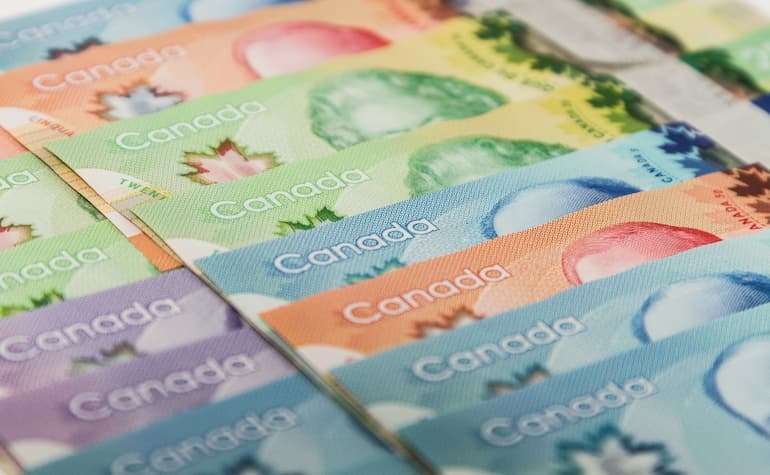

This week, the Bank of Canada (BoC) released its decision to hold interest rates at the current level of 4.50%. In the rate statement, the BoC indicated that inflation has eased to 5.9%, and the expectation for weaker economic growth and a moderation of wage growth could see inflation continue on its downward trajectory. The BoC highlighted that it projects that CPI inflation could reach the 3% level by the middle of the year, with core inflation reaching the target level of 2% in time to come.
Following the release of the decision, the Canadian Dollar weakened, with the USDCAD trading higher to test the 1.38 round number resistance level. This move higher was compounded by the recent strength of the DXY, a result of Fed Chair Powell’s testimony where he indicated that the Federal Reserve was ready to speed up rate hikes if the data warranted. The USDCAD could continue with the uptrend to trade significantly higher toward the next key resistance level of 1.39, especially if the US Non-Farm employment change to be released on Friday is stronger than expected.
However, it is likely that the USDCAD could first retrace briefly to the 1.37 price level, which aligns with the 23.60% Fibonacci Retracement level before a continuation to the upside. This brief retracement is also supported by the Relative Strength Index (RSI) as it indicates a likelihood to turn down from the overbought region.

This week, the Australian Consumer Price Index (CPI) y/y data was released at 6.8% (Forecast: 7.2% Previous: 7.4%) which signals a slowdown in inflation growth. In addition, the consecutive release of lower-than-expected CPI data highlights the possibility of a new trend of decreasing inflation for the Australian economy. With the view that inflation has peaked and is possibly on a downturn, the Reserve Bank of Australia (RBA) could decide to pause further rate hikes at its upcoming cash rate decision on Tuesday next week.
Keeping interest rates at 3.60% could lead to the AUDUSD trading slightly lower. The AUDUSD is currently trading between the key resistance level of 0.6765 and the support level of 0.6565, with the formation of a bearish pennant. If the AUDUSD maintains below the resistance level, look for a potential breakout to the downside, to retest the key support level of 0.6565.
This move lower could be driven by the recovery in strength on the DXY and if the RBA decides to hold interest rates at 3.60%.

The Consumer Price Index (CPI) is an inflation indicator that is closely watched by the markets and policymakers as a gauge of economic fluctuation and price stability. Generally, central banks set and adjust their monetary policy mandate in order to achieve a target level of 2-3% which would allow for moderate growth in prices. As the major economies emerge from the cloud of the Covid pandemic, the new battle is for the central banks to bring down inflation.
The Reserve Bank of Australia (RBA) began on its path of aggressive interest rate hikes in May 2022 as the Australian CPI had been climbing steadily to reach 6% by that same period. However, despite the rate hikes, inflation continued to rise to a peak of 8.4% in December 2022. This week, the Australian CPI y/y data was released at 7.4% which highlights an easing in inflation growth, potentially a lagging impact from the cumulate interest rate increases from the RBA.
Immediately following the release of the CPI data, the AUDUSD spiked down from the 0.6730 level to retest the round number key support level of 0.67. However, as the RBA has indicated that “further increases in interest rates will be needed over the months ahead to ensure that inflation returns to target”, the current slowdown in inflation growth could provide the RBA with more confidence that rate increases could lead to it achieving its target. As a result, sustained moves to the downside have been limited as the market anticipates another 25bps rate hike to come in the following week.
The AUDUSD currently trades under the 0.6780 resistance area which coincides with the 23.8% Fibonacci retracement level. Anticipating a bullish correction to the upside, as markets expect further interest rate increases, look for the price to break above the resistance level and the bearish trendline to trade higher toward the next key resistance level of 0.6870. This potential move higher is also supported by a crossover on the Moving Average Convergence Divergence (MACD).

It hasn’t been a good Monday morning for some investors or English travelers who wish to sell the GBP to go abroad, as the Sterling Pound has collapsed to record lows to bring almost perfect parity with the U.S Dollar at 1 GBP equals $1.09. Sterling fell to the lowest level in 37 years, trading below the $1.09 following the rate increase. The cause to fight against inflation was always going to bring unwanted consequences to countries’ currencies and economies.
The most recent example has been the effect on the GBP after the Bank of England announced a rate hike of 0.5% to lift current interest rates from 1.75% to 2.25%, the biggest since 2008. It is compounded by the U.S Dollar recent record heights, it comes as the greenback surged to a fresh 20-year high against its peers after the Federal Open Market Committee lifted its key rate by 0.75 percentage points for the third time in a row and projected further increases in borrowing costs in an effort to tame inflation. America’s strategy is different by the fact they want to keep unemployment low, at the same time of attacking inflation, this is different from the BoJ, Bank of England whose sole purpose is to keep inflation at around the 2% level.
The cost of UK government borrowing rose by the most in a single day for at least a decade, while the currency meltdown fueled speculation the Bank of England would be forced to launch an emergency rate rise to mend the UK’s battered credibility with global investors. The UK government borrowed £11.8bn last month, almost twice as much as the Treasury’s independent forecaster had expected, as high inflation pushed interest payments to an August record. Below is a snapshot of the currency at the time of writing 3:07pm on Monday 26 th of September 2022.
And they aren’t many who believe the UK’s crisis is going to improve. Big banks such as The US investment bank JPMorgan said it exposed “a broader loss of investor confidence in the government’s approach,” while Citi said the chancellor’s tax giveaway, the biggest since 1972, risked “a confidence crisis in sterling”. To conclude, it seems that the BoJ strategy in hiking interest rates its going through the rough slow growth which central bankers advised about at the Jackson Hole meeting a few weeks back and it wont be a smooth ride back up as investors are pretty spooked by the effect the hikes have had in the market and sell off of the pound has increased as the Dollar seems like a better buy given its recent rise.
Trading opportunities such as the GBP FX pairs are in focus add to this the USD who has also provided CFD traders with many opportunities the last few weeks. To create access to a Metatrader trading platform please visit us on here and activate your trading account or call us on the Melbourne office-based number 03 8566 7680. As always please do your own research and trade responsibly.
Sources: Yahoo Finance, Guardian
XAUUSD Analysis 5 – 9 June 2023 The overall outlook for gold prices is bearish in the short term. As there was a loss of buying momentum after testing the resistance area 2070, forming a Triple Top pattern on the Weekly timeframe, then there was a strong sell momentum, causing the price to fall below the price line. 1960s price line which used to be the old high when viewed from the Daily and Weekly timeframes, but nevertheless, the price is still moving in an uptrend for the medium term as the highs and lows have been established. Up when observed from the Daily time frame.
There are also no lower highs and lower lows, although the triple top pattern on the weekly timeframe suggests that the price of gold may reverse to a downward trend in the medium term. Therefore, the gold price forecast In the short term, the price may retrace to test the 1915 support area, which is where the price is expected to test before rebounding. There is still strong selling momentum from last Friday's NFP (Nonfarm Payrolls) report, giving the price a chance to move further down.
And if the price can stand on the support 1915 without falling further. Price may have a sideways correction before rallying to test the 1960 resistance again on the Daily timeframe. But if the price has a sharp drop with continuous selling momentum, it can break out the 1915 support level further down, the next important support that should be closely monitored and there is a chance that the price will fall Go to test before rebounding back up, that is 1880, which is a support level at the Daily time frame.
GBPUSD Analysis 5 – 9 June 2023 GBPUSD is bullish in the medium term after rallying to test the 1.26660 resistance to successfully form a new high on the daily timeframe before showing strong selling momentum on the Daily and Weekly timeframes. As a result, the price has continued to fall for three weeks in a row. Before breaking through the important price line that the price used to form a Double Top on the daily time frame at 1.24470, moved above the support level of 1.22700, and last week the price had strong buying momentum, resulting in an increase.
Revisiting the 1.24470 price line, which is an important level at the daily timeframe level. Forecasting that price This week the price may continue to rise. There is a high probability that the price will rise to test the resistance area that the price previously created a new high at the daily time frame level of 1.26660 again, as the price continues to move in an uptrend pattern.
Because higher Highs and Lows are made. But if the selling momentum continues to sell continuously and is very strong This will result in the price being able to break out around the 1.24470 price line and go further down to test the next support, 1.22700, which is an important support at the Daily timeframe level. EURUSD Analysis 5 – 9 June 2023 EURUSD is bullish in the medium term after rallying to test the 1.11000 resistance zone, which was the last high on the daily timeframe, but failed to make a new high and the price has strong selling momentum.
It appears clearly when looking at the closing of the sell pressure candlestick on the weekly time frame for the past four weeks. And the previous week closed in a Doji candle, indicating the market's hesitancy to continue falling or bouncing back. forecasting that price This week, the pair may face a short-term sideways trend with a high probability of a correction at the 1.07450 support area before a rebound to test the 1.11000 resistance. Again, as the price continues to move in an uptrend pattern, higher lows have been formed, although the high has yet to rise beyond the 1.11000 price line.
But if the selling momentum continues to sell continuously and is very strong This will result in the price being able to break out at the 1.07450 support level and continue down to test the next support, 1.05250, which is an important support at the daily timeframe level that should be watched.
XAUUSD Analysis 29 May – 02 June 2023 Forecasting the price of gold in the short term, the price may move down to test the 1915 support area, which is the area where the price is expected to bounce back. and if the price can stand without falling further Price may have a sideways correction before rallying to test the 1960 resistance again on the Daily timeframe. But if the price has a sharp drop with continuous selling momentum, it can break out the 1915 support level further down, the next important support that should be closely monitored and there is a chance that the price will be good Rebound, that is 1880, which is the support level at the Daily time frame. However, most investors keep an eye on the Non-Farm Payrolls (Nonfarm Payrolls) report and the unemployment rate report. (Unemployment Rate) on Friday, June 2, this coming.
This will directly affect the direction of gold prices. GBPUSD Analysis 29 May – 02 June 2023 GBPUSD is bearish in the short term after rallying to test the 1.26660 resistance to successfully form a new high on the daily timeframe before showing strong selling momentum on the Daily and Weekly timeframes. As a result, the price continued to fall for three weeks in a row before breaking through the key price that previously formed a double top on the daily timeframe 1.24470, moving above 1.22700 support.
Forecasting that price This week, the price may move slightly further. There is a high probability that the price will drop to test the support area of 1.22700 before a correction sideways. To bounce back up to retest the important price line 1.24470 as the price continues to move in an uptrend pattern.
But if the selling momentum continues to sell continuously and is very strong As a result, the price can break out at the support level of 1.22700 and go down further to test the next support, 1.18080, which is an important support level on the Daily time frame. However, most investors keep an eye on the Non-Farm Payrolls (Nonfarm Payrolls) report and the unemployment rate report. (Unemployment Rate) on Friday, June 2, this coming. This will have a direct effect on the GBPUSD price direction.
EURUSD Analysis 29 May – 02 June 2023 EURUSD has a short-term bearish view after rallying to test the 1.11000 resistance zone, which was the last high on the daily timeframe, but failed to make a new high and the price has strong selling momentum. It appears clearly when looking at the closing of the sell pressure candle on the weekly timeframe for the past three weeks. Forecasting that price This week, the pair may face a sideways trend with a high probability of a correction at the 1.07450 support area before a rebound to retest the 1.11000 resistance as the price continues to move in an uptrend pattern.
But if the selling momentum continues to sell continuously and is very strong This will result in the price being able to break out at the 1.07450 support area and go further down to test the next support, 1.05250, which is an important support at the daily timeframe level. However, most investors keep an eye on the Non-Farm Payrolls (Nonfarm Payrolls) report and the unemployment rate report. (Unemployment Rate) on Friday, June 2, this coming. This will have a direct effect on the EURUSD price direction.