

マーケットニュースとインサイト
専門家によるインサイト、ニュース、テクニカル分析で市場の先を行き、取引判断をサポートします。

April's US earnings season is landing in a market that wants more than a good story. JPMorgan has already set a high bar with a strong result, and attention is now shifting to the engine room of the S&P 500: AI infrastructure where three companies are at the centre of that story.
Why this earnings window matters for AI
Microsoft, Alphabet and NVIDIA are not just participants in the AI cycle, they are building the physical and software architecture that other companies depend on: the chips, the cloud regions, the models and the tools. If this spending is going to deliver returns, the first signs may start to show in their quarterly results over the next few weeks.
Each company represents a different test.
- Microsoft: Whether enterprise AI adoption is translating into revenue and margin expansion
- Alphabet: Whether owning the full stack, from chips to cloud to distribution, is a durable advantage or simply an expensive position to defend
- NVIDIA: Whether the hardware cycle is still holding, accelerating or starting to level out
In 2026, the question is no longer whether AI investment is happening, the capital commitments are substantial and already publicly stated. The question is whether that spending is generating returns quickly enough to justify the scale of those bets.


The Relative Strength Index (RSI) is an oscillator type of indicator, designed to illustrate the momentum related to a price movement of a currency pair or CFD. In this brief article we aim to outline what this indictor may tell you about market sentiment, and along with other indicators assist in your decision-making. As with most oscillator type of indicator, the RSI can move between two key points (0-100).
The major aim of the RSI is to gauge whether a particular asset, in our context a forex pair or CFD, is overbought or oversold, and the associated key levels are below 30 (when it is classed as “Oversold”) and above 70 (where it is classed as “overbought”). To bring up an RSI chart on your MT4/5 platform it is simply a case of finding the RSI in your list of indicators in the Navigation box and clicking and dragging it into your chart area. The diagram below illustrates this on a 30-minute chart.
It is generally thought that if the RSI moves into either of these two zones then a change may be imminent. Most commonly the RSI may be used as part of entry decision making. Traders may use this as an additional tick (when other indicators suggest entry) to make sure they do not enter a long trade on an overbought currency pair, or short trade on an oversold currency pair.
Therefore, when articulating this in your trading plan it may read something like the following: a. I will refrain from entry into a long trade if the RSI has moved above 70 on the last trading bar. b. I will refrain from entry into a short trade if the RSI has moved below 30 on the last trading bar.
Less frequently but logically, if one accepts this premise that a move into either of the previous described zones then a trend change may be imminent. It could also be used as a “warning” to potentially exit from an open trade. Traders who wish to explore this in their own trading could: a.
Tighten a trail stop to within a specified number of pips from current price e.g., 10 Pips. or b. Exit the trade entirely. Of course, in either case and with any indicators we discuss, back-testing it with previous trades to ascertain any change in outcomes can be performed to justify a prospective test.
Finally, after gathering a critical mass of trade examples exploring if this would make a difference, this could provide the evidence to suggest whether you should (or should not if there is no difference) formally add to your trading plan. For a live look at how indictors may be used in the reality of trading decision making, why not join our “Inner Circle” group with regular weekly webinars on a range of topic including that of indicators. It would be great to have you as part of the group.
CLICK HERE to enroll for the next inner circle session. This article is written by an external Analyst and is based on his independent analysis. He remains fully responsible for the views expressed as well as any remaining error or omissions.
Trading Forex and Derivatives carries a high level of risk.

Definition of Moving Average In trading, moving averages are often used to smooth out price data to generate trend-following indicators. The most commonly used types are the Simple Moving Average (SMA) and the Exponential Moving Average (EMA). A Simple Moving Average is calculated by defining a period, e.g., 10—or, in other words, the last 10 candles—adding these last 10 close prices, and then dividing by 10.
This is recalculated every time a candle closes and may be plotted as a single line on a price chart. An Exponential Moving Average is often preferred by many traders because it gives more weight to recent prices and appears to be more responsive to price changes than the Simple Moving Average. Ways to Use Moving Averages in Trading Decisions – An Overview Although, like most indicators on a trading platform, a moving average is 'lagging' in terms of the information it provides, its ability to indicate trend direction and changes makes it popular.
For entry points, traders often use two different moving averages, such as a 10 and 20 EMA on a chart. When these crossover so that the 10 is higher than the 20, for example, it may be indicative of a new uptrend (and vice versa for a potential downtrend). Larger moving averages, like the 200 and 50, are commonly observed, particularly when these cross.
For instance, the 50 crossing below the 200 is termed the "death cross" and could indicate a long-term uptrend changing to a downtrend. For exit strategies, rather than waiting for a moving average cross, a more timely exit signal might be a cross between price and a moving average. This is the major focus of this article, and we will discuss this approach along with a few considerations.
Using Price and Moving Average as a Trail Stop So let us first clarify what we mean by a trail stop or trailing stop. Traditionally, a trail stop is a type of stop-loss order that moves with the market price as a trade progresses in your desired direction. For example, if you buy a stock at $100 with an initial stop of $90 and the price moves up to $110, you may "trail" your initial stop from $90 up to $102.
This means that if the trade turns around and moves back down to $102, triggering your trail stop, you would still make a minimum profit of $2 per share, even if the price continues to drop back to $90. If the price doesn't drop but continues to rise, you can move your trail stop higher, for example, to $115, then $120, and so on, until the price eventually falls and triggers an exit. In simple terms, a trail stop locks in profit and manages the risk of giving all potential profit back to the market as the price moves in your desired direction.
Many approaches systematize the use of a trail stop as part of a trading plan, rather than simply using an arbitrary price. One of these approaches is to use a moving average as a trail stop, which we will now discuss in more detail. Moving Average as a Trail Stop Using a moving average as a trail stop means that instead of setting your stop-loss at a fixed dollar amount below the market price, you set it at the level of a particular moving average.
As the moving average changes, your trail stop will move with it. For example, consider the chart below where we have entered a short gold trade on an hourly timeframe at point "A," anticipating a potential trend reversal. The yellow line on the chart is a 10EMA.
The price moves in our desired direction and closes above our yellow line (or the 10 EMA) at point "B," locking in a good profit for this trade. As you can also see, a candle's price crossed temporarily over the 10EMA at point "C" but closed below it. This is an important consideration that we will touch upon later.
Considerations for Traders There are several factors to consider when deciding which approach suits your individual trading style, and these should be tested to find the optimal strategy for you. Which MA Type?: We've already discussed the major differences between Simple and Exponential Moving Averages. Many traders, particularly those trading shorter timeframes, tend to prefer the EMA due to its greater responsiveness to trend changes.
However, just because a particular approach is right for many doesn't mean it can't be different for you. Which Period MA?: This is probably the most debated consideration. A longer EMA, e.g., 20 instead of 10, will require a more significant price drop to trigger, meaning you may give more back to the market if the drop continues.
However, this must be balanced against the possibility that any uptrend may pause and even retrace for a period before resuming its climb. MA Touch or Close?: Another key debate is whether a trail stop using a moving average should be triggered by any touch of that moving average at any time, or whether to wait for a close price through the MA. Both approaches have pros and cons, which need to be weighed carefully.
In Summary There's no doubt that the concept of using a trail stop merits exploration for any trader. Price/MA cross is a relatively easy concept to understand and implement and can improve trading outcomes irrespective of the "fine-tuning" considerations discussed. Your challenge is clear: thorough, ongoing testing is essential to refine your choice and find the optimal method for you.
Strategies Simple Moving Average (SMA) Strategy: Utilizing a 50-day SMA as a trail stop could be effective for longer-term trades. If the price drops below the 50-day SMA, you could trigger a sell order. Exponential Moving Average (EMA) Strategy: For more sensitive, shorter-term trading, a 20-day EMA could be used as a trail stop.
The EMA gives more weight to recent prices and thus responds more quickly to price changes. Price Percentage and MA Combination: You could set a rule where the trail stop triggers if the price drops a certain percentage below the moving average. For example, if the 50-day
In this climate of phishing and scam websites and messages, we’d like to take this opportunity to remind our clients of the official GO Markets websites. Scammers at times will register similar domains, with minor spelling differences, and copy our website design in an attempt to deceive visitors. These copies can sometimes be very convincing.
GO Markets' genuine websites are www.gomarkets.com, www.gomarkets.eu and www.gomarkets.ltd If in any doubt about a website, simply visit www.gomarkets.com directly. GO Markets is also on a number of Social Media platforms; Facebook, Instagram, LinkedIn, Twitter, WeChat and YouTube. When following links from Social Media pages, please ensure you are directed to one of the legitimate websites above, as scammers may also set up fake Social Media profiles in an attempt to direct users to false websites.
As always, if you have any concerns, please reach out to our Customer Support team or your Account Manager directly.
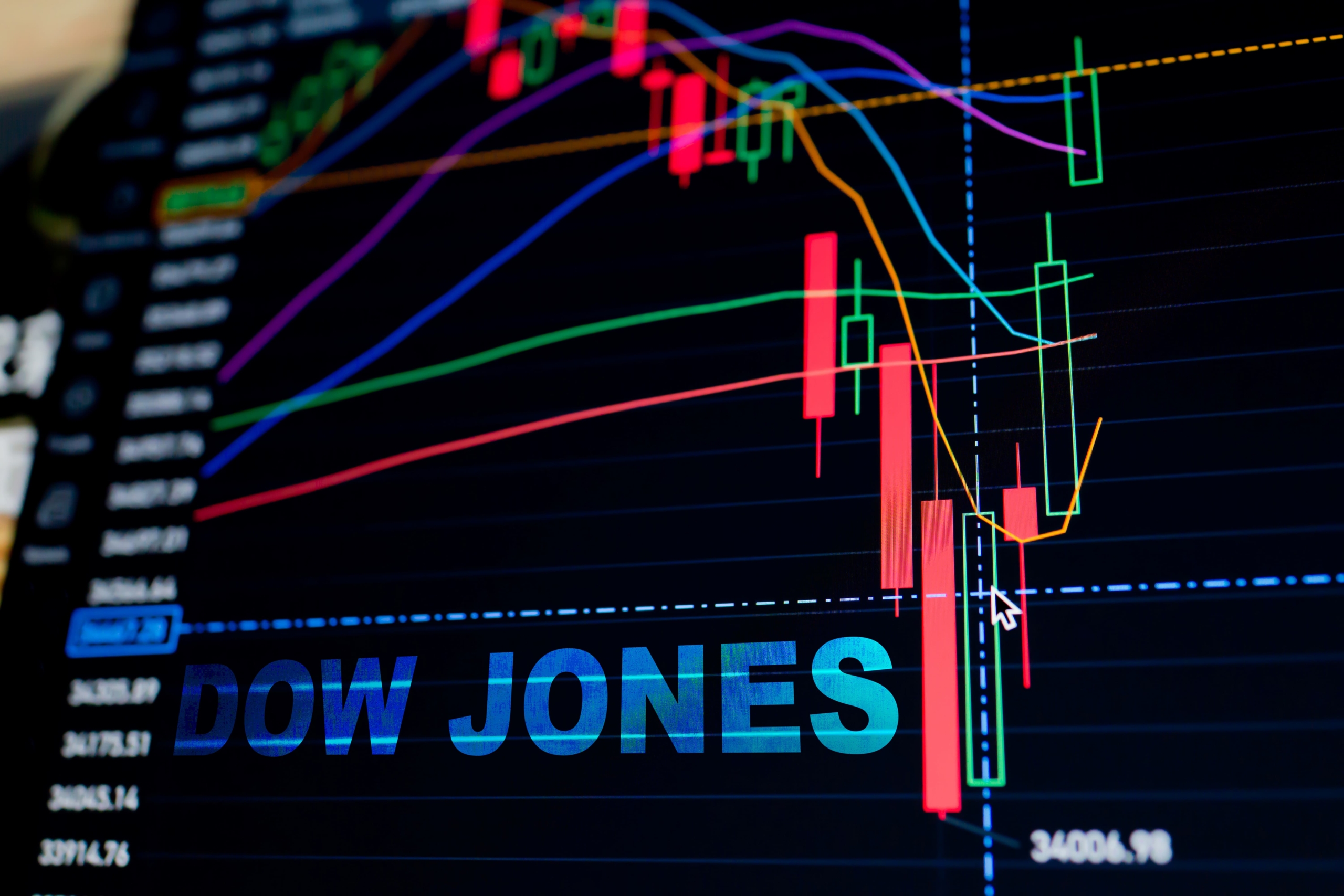
Index trading is one of the most popular class of markets to trade for CFD traders, rivalling major FX pairs in trading volume, but what is indices trading and how does trading them with CFDs work? Most people will be familiar with the names of the major stock indices from financial reports in all forms of media, the most popular stock indices of CFD traders and the stocks they track are below: USA The Dow Jones Industrial average - 30 largest blue-chip companies in the US NASDAQ Composite Index – Top 100 largest non-financial companies in the US (Mostly Tech) S&P 500 Index - 500 large cap companies in the US (Bank heavy) Europe and UK FTSE 100 – Top 100 UK companies CAC 40 – Top 40 French companies DAX 40 – Top 40 German companies (Formerly known as the DAX30 which it may still be labelled as) Asia and Australia ASX 200 – Top 200 Australian companies Hang Seng - A selection of the largest companies in Hong Kong. Nikkei 225 - Consists of 225 stocks in the Prime Market of the Tokyo Stock Exchange Some of the advantages of trading indices: You can take a broad view of the health (or not) of that countries stock market, i.e. rather than take a position in a single stock, take a position in a basket of stocks by buying or selling the index they are components of.
Higher leverage available to trade stock indices, up to 100:1 for qualified Pro clients. Extended trading hours, you can take positions in most indices up to 23 hours a day, far greater hours than the underlying stock exchanges. Take positions long or short with ease to profit from both a rising and falling market.
When you take a Long (Buy) position you profit if the market moves up, a Short (Sell) position will profit when the market moves down. How Indices are priced and understanding your position size Stock Indices are priced in the native currency i.e., the Dow Jones (WS30 on the GO Markets platform) is priced in USD, the FTSE100 in GBP, the ASX200 in AUD etc. This is important to keep in mind when choosing your position size, it also important to know the specifications of the contract you are trading is to make sure you understand the lot sizing before entering a trade.
You can check the specifications of any contract on MT4 and MT5 by right clicking it in the Market Watch Window and selecting “Specification” An example specification of the Dow (WS30) is below (MT4 specs, MT5 is very similar): You can see in the example above that the WS30 contract with GO Markets has a contract size of 1, this means 1 lot will equal $1 USD per point movement in PnL if you take a position. e.g., if you buy 1 lot at a price of 33670 and the price rises to 33680 you are in profit by 10 points, which would equal $10 USD Most indices will have a contract size of 1, though it is advisable to always check as some may have different values, an example in the S&P 500 (US500) which has a contract size of 10. It is important to understand the contract size and base currency of the index you are trading before entering a trade to avoid any nasty surprises. Main drivers of what moves an Index’s price.
In choosing which Index to trade it is also important to understand the drivers of that index and it’s component stocks. All Indexes will have some common drivers, such as global growth concerns, geopolitical events and non-US indices will be affected (fairly or not) by what US markets are doing. Each index will also have its own individual drivers as well though.
Examples The NASDAQ (NDX100) is heavily weighted with mega cap tech stocks, the health of the Tech sector will heavily influence its price. The ASX200 and FTSE100 both have large contingents of miners, meaning commodity prices will be big drivers of these 2 indexes, more so the ASX200. The Russell 2000 has many regional and mid-size banks as its component stocks, which is why during the recent banking crisis it underperformed other US indices.
Understanding these unique drivers for each Index is recommended to make the best trading decisions possible. In Summary, trading Indices opens up some great opportunities to position yourself to profit from market moves, spreads on Indices with GO Markets are some of the best in the CFD industry, with tight spreads in and out of hours( Some brokers will artificially increase spreads on Indices outside the stock market hours of that country) They allow you to seamlessly take long or short positions to speculate for profit, or to headge existing stock positions from an overnight move. You can click the link below to learn more about Index trading with GO Markets. https://www.gomarkets.com/au/index-trading-cfds/
The US Dollar Index (DXY) is a popular tool used by forex traders to assess the value of the US dollar relative to a basket of other major currencies. The DXY is calculated using the weighted average of six major currencies: the euro, yen, pound sterling, Canadian dollar, Swedish krona, and Swiss franc. To use the DXY to trade forex, you can follow these steps: 1.
Monitor the DXY: Keep an eye on the movements of the DXY to get a sense of the overall strength or weakness of the US dollar. You can use technical analysis tools, such as moving averages or trend lines, to identify the direction of the trend. 2. Analyse currency pairs Look for forex pairs that are inversely correlated to the DXY.
This means that when the DXY goes up, the currency pair goes down, and vice versa. For example, the EUR/USD pair is negatively correlated to the DXY, which means that as the DXY goes up, the EUR/USD pair goes down. Plan your trades Once you have identified a currency pair that is inversely correlated to the DXY, you can plan your trades accordingly.
For example, if the DXY is showing signs of weakness, you may want to consider going long on a negatively correlated currency pair, such as the EUR/USD. Manage your risk As with any trading strategy, it's important to manage your risk when using the DXY to trade forex. Make sure to use stop-loss orders to limit your losses in case the market moves against you.
Currency pairs may be influenced by other factors besides the DXY, which may not be a perfect indicator of the US dollar's value. To make informed trading decisions, it is important to combine the DXY with other technical and fundamental analysis tools.
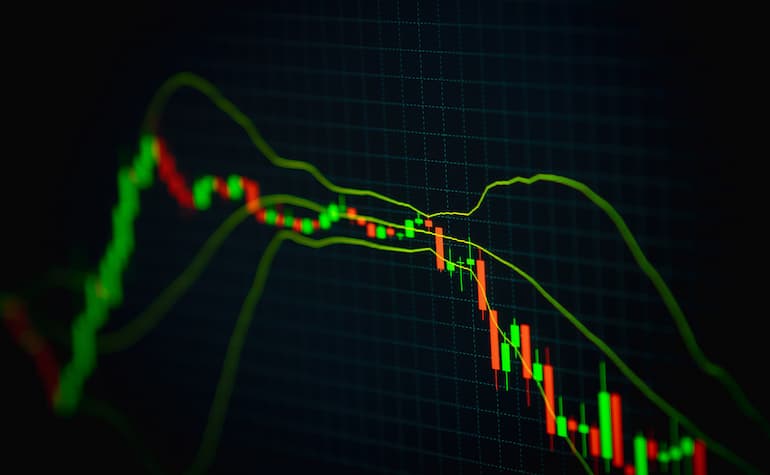
Bollinger Bands are one of the most popular indicators that FX and CFD traders use, invented in the 1980’s they are a technical analysis tool that are widely used by short and long term traders. The main uses for Bollinger Bands is determining turning points in the market at oversold and overbought levels and also as a trend following indicator. Like any technical indicator Bollinger Bands should be used with your own analysis to confirm trades and help set entry and exit levels, they are a fairly simple indicator that focuses on price and volatility only and shouldn’t, in my opinion be used in isolation.
While effective, to use them successfully you will need to be aware of the fundamentals and other technical indicators such as major support or resistance levels. How Bollinger Bands are calculated Bollinger Bands are composed of three lines. The middle line is a simple moving average (SMA), the default period being 20.
The upper and lower bands are the SMA plus or minus 2 standard deviations by default, the SMA period and Deviations can be adjusted in the settings of the indicator if desired, but the standard settings are the most popular settings among traders. When the price hits the upper band the market could be seen as “overbought” when it hits the lower band it could be seen as “oversold”, they can also be used as levels where trends are confirmed, e.g. hitting upper band could be seen as the start of a strong uptrend and vice versa. Day Trading strategies using Bollinger Bands Bollinger Bands are used mainly in two different trading styles, for contrarians looking for overbought and oversold levels to enter fade trades, or confirmation of trend for trend following systems. Both systems have their pros and cons, as with most indicators it will depend on the market “fee” for the time used, a choppy whipsawing market will see the fading system work very well, a strong trending market will see the trend following system work very well.
As with any technical system, the selection of the market to trade and being aware of the fundamentals driving the FX market at that time are critical.. Just had a Fed meeting where they surprised with a 100bp rate hike? Don’t use the fade system on USD pairs!
A good technical system I have found is useful is a mixture of both of these strategies, using the Bollinger Bands to confirm a trend, then using the fading strategy to trade pullbacks of this trend. Lets look at the example below from the AUDNZD – 5 minute chart from the 23 rd March 2023 In the above example, which is a common price action across all FX pairs, you would be using the Bolling Bands to confirm a down trend after a close below a major low. Once the possible trend is confirmed, we will be using the “overbought” level of the upper band to enter a short trade, with a take profit exit on 2 closes below the lower band, indicating the market may have gone into “oversold” territory and was time to take some money off the table.
This process would be repeated while lower highs were being made, a close above a major recent high along with a close above the upper Bollinger Band would indicate the trend may have come to an end. This can be seen on the chart below, later in the session on the same pair. At this point you would exit the short selling of the down trend and reverse to a long bias, or if your analysis on fundamentals were negative for this pair, wait for a new downtrend to form for another shorting run.
The Bollinger Squeeze Strategy Another strategy popular with FX traders is known as the Bollinger squeeze strategy. A squeeze occurs when the price has a big move, then consolidates in a tight range, this also sees the Bollinger bands go from wide to “squeeze” in a much narrower range, hence the name of the strategy. A trader would be looking for a breakout and close below or above the Bollinger bands of this squeezed range for a trade entry, see the example below from the EURUSD 5 Minute chart on 23 rd of March 2023 When the price breaks through the upper or lower band after this period of consolidation a buy or a sell signal is generated.
An initial stop is traditionally placed just above (or below in a long position) the range of the consolidation. TP rules could be similar to the previous strategy, i.e. multiple closes below the lower Bollinger Bans in the case of a short, or using the middle Bollinger Band as a trailing stop in the move is explosive and looks to continue. Summary As you can see there are multiple uses for Bollinger Bands in a FX day traders toolbox, including using them for overbought and oversold trade signals in a trending market and the Squeeze strategy where an explosive move often follows a period of consolidation.
There are also many more strategies using this indicator which I encourage you to research for yourself.