All eyes will be on the Jackson Hole in Wyoming this week, where the annual Jackson Hole Economic Symposium will be held by the Federal Reserve Bank of Kansas City. This years symposium will take place from 23rd until the 25th of August and the topic for the upcoming event will be “Changing Market Structure and Implications for Monetary Policy”. About Jackson Hole Economic Symposium The key feature of the meeting is the discussion that takes place between the participants.
Because of the high-profile participants and the topics that are discussed in the event, there is a considerable interest in the symposium, however, to help foster the open discussion that is critical to the event, the attendance is very limited. The event receives a large number of requests from media agencies worldwide, however, the press presence is also limited to a group that is selected to provide transparency to the symposium. Importance of the event The symposium is closely followed by financial markets participants around the world and over the past decade it has attracted more attention, this is mainly because what has happened in the past.
Some of the biggest monetary policies were initially revealed at the event, although they were not formally announced. During the event, any unexpected comment from any participants can influence the global financial markets. Here are some notable moments from the Jackson Hole Symposium: 2005 – Raghuram Rajan (then the professor at the University of Chicago and former governor of Reserve Bank of India) warned about risks that the financial system had absorbed throughout the years.
Three years later, the US subprime mortgage crisis erupted into the global financial crisis. 2012 – Michael Woodford (macroeconomist and monetary theorist, Columbia University) presented where he said that Fed’s stance on keeping its main interest rate near zero until a certain time would reflect pessimism about the speed of the economy’s recovery. Later that year, the Fed announced it would keep rates near zero until unemployment fell to 6.50% and inflation did not climb above 2.50%. 2014 – Mario Draghi (ECB president) hinted that the ECB was edging closer to embarking on its QE path. During the event, Mario Draghi said that ECB could use ‘all the available instruments’.
His announcement came just two months after ECB introduced negative deposit rates in the Eurozone, the financial markets rallied during his speech at the Jackson Hole. The symposium is a must watch financial market event and it is worth keeping an eye on the discussions and speeches during the event as we may see statements from some of the most influential people from around the world. This year, Federal Reserve Chairman Jerome Powell will headline the event in Jackson Hole with a speech about monetary policy in a changing economy, according to the Fed Board so it’s time to mark your calendars!
Klāvs Valters Market Analyst
By
Adam Taylor
CFTe. Director, Go Markets London.
The information provided is of general nature only and does not take into account your personal objectives, financial situations or needs. Before acting on any information provided, you should consider whether the information is suitable for you and your personal circumstances and if necessary, seek appropriate professional advice. All opinions, conclusions, forecasts or recommendations are reasonably held at the time of compilation but are subject to change without notice. Past performance is not an indication of future performance. Go Markets Pty Ltd, ABN 85 081 864 039, AFSL 254963 is a CFD issuer, and trading carries significant risks and is not suitable for everyone. You do not own or have any interest in the rights to the underlying assets. You should consider the appropriateness by reviewing our TMD, FSG, PDS and other CFD legal documents to ensure you understand the risks before you invest in CFDs.

เงินเป็นโลหะที่ได้รับประโยชน์มากที่สุดจากการบูมของ AI ปี 2025 โดยมีการพุ่งสูงสุดถึง 112 เหรียญสหรัฐเพื่อเริ่มต้นปี 2026 (สูงกว่ามูลค่าพื้นฐาน 70% ตามสัญญาณ Bank of America) แสดงให้เห็นถึงศักยภาพที่ผันผวนของมัน
ไดรเวอร์ที่สำคัญ
ความต้องการอุตสาหกรรมจากโครงสร้างพื้นฐาน AI ยานพาหนะพลังงานแสงอาทิตย์และไฟฟ้า (EV) เซมิคอนดักเตอร์ และศูนย์ข้อมูลในปัจจุบันไม่มีการทดแทนการนำไฟฟ้าของเงินที่ใช้งานได้
The Australian Securities Exchange (ASX) is one of the world's top 20 exchanges, hosting over 2,000 listed companies worth approximately $2 trillion.
Quick Facts:
The ASX operates as Australia's primary stock exchange, combining market trading, clearinghouse operations, and trade and payment settlement.
It represents roughly 80% of the Australian equity market value through its flagship ASX 200 index.
2,000+ companies and 300+ ETFs are listed on the exchange, spanning from mining giants to tech innovators.
How does the ASX work?
The ASX combines three critical functions in one system.
As a market operator, it provides the electronic platform where buyers and sellers meet. Trading occurs through a sophisticated computer system that matches orders in milliseconds, replacing the traditional floor-based trading that once defined stock exchanges globally.
The exchange also acts as a clearinghouse, ensuring trades settle correctly. When you buy shares, the ASX guarantees the transaction completes, managing the transfer of securities and funds between parties.
Finally, it serves as a payments facilitator, processing the money flows that accompany each trade. This integrated approach reduces settlement risk and keeps the market running smoothly.
What are ASX trading hours?
The ASX operates from 10:00am to 4:00pm Sydney time (AEST/AEDT) on business days, with a pre-open phase from 7:00am.
Stocks open alphabetically in staggered intervals starting at 10:00am, followed by continuous trading until the closing auction at 4:00pm.
The exchange observes Australian public holidays and adjusts for daylight saving time between October and April, which can affect coordination with international markets.
ASX trading hours by time zone
Phase
Sydney (AEST)
Tokyo (JST)
London (BST)
New York (EDT)
Pre-Open
7:00am - 10:00am
6:00am - 9:00am
10:00pm - 1:00am
5:00pm - 8:00pm*
Normal Trading
10:00am - 4:00pm
9:00am - 3:00pm
1:00am - 7:00am
8:00pm - 2:00am*
Closing Auction
4:00pm - 4:10pm
3:00pm - 3:10pm
7:00am - 7:10am
2:00am - 2:10am
*Previous day. Note: Times shown assume daylight saving time in effect (AEST/BST/EDT). Japan does not observe daylight saving. Time differences vary when regions switch between standard and daylight saving at different dates.
Top ASX Indices
S&P/ASX 200
This is the exchange's flagship index. It tracks the 200 largest companies by market capitalisation and represents approximately 80% of Australia's equity market.
It serves as the primary benchmark for most investors and fund managers and is rebalanced quarterly to ensure it reflects the current market leaders.
The ASX also breaks down into 11 sector-specific indices, allowing investors to track performance in areas like financials, materials, healthcare, and technology.
These indices can help identify which parts of the Australian economy are strengthening or weakening.
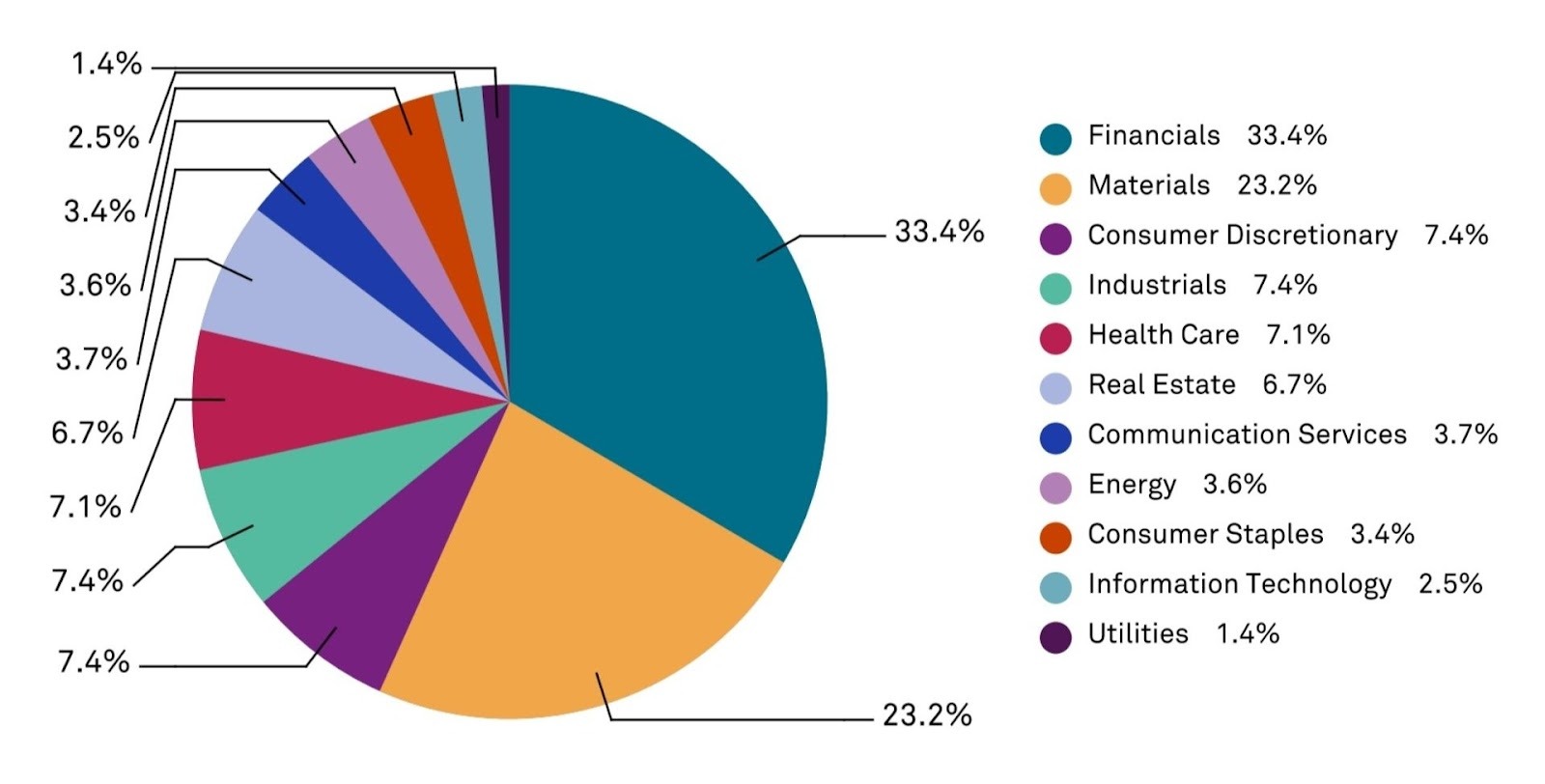
ASX sector breakdown as of 31 December 2025. Source: S&P Global
Financials dominates as the largest sector, driven by Commonwealth Bank, NAB, Westpac, and ANZ. These banking giants provide lending, wealth management, and insurance services across Australia.
Materials ranks second, led by mining powerhouses BHP and Rio Tinto. This sector extracts and processes resources, including iron ore, coal, copper, and gold.
Consumer Discretionary includes retailers, media companies, and hospitality groups that benefit when household spending rises.
Industrials encompasses construction firms, airlines, and professional services businesses.
Healthcare features companies like CSL, a global biotech leader, and Cochlear, which produces hearing implants.
Real Estate features property developers and Real Estate Investment Trusts (REITs) that own and manage commercial and residential assets.
Communication Services includes telecommunications providers like Telstra alongside media and entertainment companies.
Energy tracks oil and gas producers (many renewable energy companies typically fall under utilities).
Consumer Staples covers essential goods providers like supermarkets and food producers.
Information Technology includes software developers and IT services firms.
Utilities covers electricity, gas, and water suppliers, including renewable energy.
ASX Symbol
Sector
Top Stocks
% of ASX 200
XFJ
Financials
CBA, NAB, ANZ
33.4%
XMJ
Materials
Orica, Amcor, BHP
23.2%
XDJ
Consumer Discretionary
Harvey Norman, Crown
7.4%
XNJ
Industrials
Qantas, Transurban
7.4%
XHJ
Health Care
ResMed, CSL and Cochlear
7.1%
XRE
Real Estate
Mirvac, LendLease, Westfield
6.7%
XTJXIJ
Communication Services
Telstra, Airtasker
3.7%
XEJ
Energy
Santos, Woodside
3.6%
XSJ
Consumer Staples
Woolworths, Westfarmers
3.4%
XIJ
Information Technology
Dicker Data, Xero
2.5%
XUJ
Utilities
AGL, APA Group
1.4%
Data accurate as of 31 December 2025
Top ASX companies
Three companies consistently lead the S&P/ASX 200 by market capitalisation.
Commonwealth Bank (Mkt cap: A$259 bln)
Commonwealth Bank holds the top position on the ASX as Australia's biggest lender.
Founded in 1911 and fully privatised by 1996, CBA offers retail banking, business lending, wealth management, and insurance.
Its performance often signals the health of the domestic economy.
BHP Group (Mkt cap: A$241 bln)
BHP Group stands as the world's largest mining company.
Its diversified portfolio spans iron ore, copper, coal, and nickel operations globally.
It serves as a bellwether for Australian commodity markets.
CSL Limited (Mkt cap: A$182 bln)
CSL Limited leads the Australian healthcare sector as a global biotech firm.
Established in 1916, CSL develops treatments for rare diseases and manufactures influenza vaccines.
The company demonstrates Australian innovation competing on the world stage.
The ASX serves as a vital mechanism for capital formation in Australia. It tends to provide price signals that reflect market expectations.
When share prices rise, it suggests optimism about economic conditions. Falling markets may indicate concerns about future growth.
Australian companies raise funds through initial public offerings and follow-on share sales on the ASX, using proceeds to expand operations, fund research, or pay down debt.
Investors in these shares benefit from potential capital gains and dividend income. Many Australians build retirement savings through superannuation funds that invest heavily in ASX-listed companies.
Employment in financial services also depends partly on a healthy stock market. Brokers, analysts, fund managers, and supporting roles exist because of active capital markets.
Key takeaways
The ASX functions as a market operator, clearinghouse, and payments facilitator, providing the infrastructure that enables capital formation and supports retirement savings for millions of Australians.
Its flagship index, the S&P/ASX 200, tracks the 200 largest companies and captures about 80% of market capitalisation, while the All Ordinaries index covers the top 500.
Financials and Materials dominate the exchange, led by Commonwealth Bank, BHP, and CSL, reflecting Australia's strength in banking and resources.
ในปี 2026 คำถามไม่ใช่อีกต่อไปว่าการลงทุน AI กำลังเกิดขึ้นหรือไม่ แต่ภาระผูกพันด้านเงินทุนนั้นมีนัยสำคัญและระบุไว้ต่อสาธารณะแล้วคำถามคือการใช้จ่ายนั้นสร้างผลตอบแทนอย่างรวดเร็วพอที่จะพิสูจน์ขนาดของการเดิมพันเหล่านั้นหรือไม่
IMPORTANT: REPORTING SCHEDULES CAN CHANGE WITHOUT NOTICE. REPORTING DATES AND RELEASE TIMES ARE FROM COMPANY INVESTOR RELATIONS CALENDARS WHERE MARKED CONFIRMED; OTHERWISE THEY ARE GO MARKETS ESTIMATES. CONSENSUS EPS, REVENUE AND ANALYST-RANGE DATA ARE FROM THIRD-PARTY MARKET CONSENSUS SOURCES, AS OF 16 APRIL 2026 (AEST). COMPANY GUIDANCE, BACKLOG AND OPERATING METRICS ARE FROM THE LATEST COMPANY FILINGS OR RESULTS PRESENTATIONS UNLESS STATED OTHERWISE. FIGURES AND SCHEDULES MAY CHANGE WITHOUT NOTICE.
$MSFT| Q1 2026 REPORTING PERIOD
Microsoft Corporation
NASDAQ | Technology | 29 Apr 2026
Confirmed
Global Release Countdown (AMC)
00:00:00:00
Consensus EPS
US$4.04
Consensus Revenue
US$81.40bn
AU/ASIA30 Apr | 6:05 am
US/LATAM29 Apr | 4:05 pm
Market Intelligence: $MSFT
Analysis: Microsoft price drivers and scenarios
Azure Growth Target
37-38%
Constant currency projection
AI Contribution
+6-8 pts
Azure revenue from AI services
FY26 Capex
US$146bn
Total infrastructure spending
AVG
LOW US$3.86AVG US$4.04HIGH US$4.14
Microsoft is being tested on a specific question: can it turn heavy AI spending into margin expansion? A result above US$4.14 could ease concerns over "capex fatigue" and demonstrate whether Azure growth is re-accelerating alongside enterprise AI adoption.
Factors that could move the markets
Azure growth rate
Watch if constant-currency growth re-accelerates above 39%, suggesting AI workloads are filling new capacity rather than sitting idle.
Signal: Capacity Utilisation
Workplace agent adoption
The shift to autonomous agents is central. Clear enterprise uptake in Dynamics 365 supports the high-tier subscription thesis.
Signal: Software Monetisation
Maia 200 cost savings
If the in-house AI chip is lowering inference costs at production levels, gross margins may start to recover from recent compression.
Watch: Gross Margin Recovery
Regulatory backdrop
Ongoing scrutiny of cloud bundling practices remains a potential headwind; management commentary here is vital for the long-term view.
Watch: Bundling Compliance
Sentiment Analysis · Microsoft Corp.
Interactive scenario analysis: $MSFT
Select earnings outcome
AI Scaling Proof
Strong result, backed by real AI progress
EPS above US$4.14 and Azure re-acceleration above 39% could support the view that AI spending is starting to translate into commercial returns. Workplace Agents show measurable ROI and FY26 guidance is raised.
EPS Outcome
Above US$4.14
Cloud Signal
Accelerating
Guidance
Raised
Possible reaction
Strong rally
Sources & Data Methodology
Sources: Reporting dates and release times are from company investor relations calendars where marked Confirmed; otherwise they are GO Markets estimates. Consensus EPS, revenue and analyst-range data are sourced from Bloomberg and Earnings Whispers, as at 16 April 2026 (AEST). Company guidance, backlog and operating metrics are sourced from the latest company filings or results presentations. Any scenario analysis reflects GO Markets analysis. Figures and schedules may change without notice.
Expanded Coverage
Beyond the Chipmakers
As the "show me the money" year unfolds, discover how AI demand is impacting Tesla, NextEra, and Exxon.
Alphabet has transformed from a search business into a sprawling AI infrastructure play, and this result will test whether that transformation is delivering. The US$185 billion capex forecast for 2026 is extraordinary, close to double last year's spending. EPS is expected to decline slightly year on year, precisely because that infrastructure spending is consuming capital. The question is whether Google Cloud's growth is fast enough to show a credible path back to margin recovery, and whether Ironwood, the seventh-generation custom AI chip, is proving its cost-per-query advantage at scale.
$GOOGL| Q1 2026 REPORTING PERIOD
Alphabet Inc.
NASDAQ | Technology | 29 Apr 2026
Confirmed
Global Release Countdown (AMC)
00:00:00:00
Consensus EPS
US$2.64
Consensus Revenue
US$92.14bn
AU/ASIA30 Apr | 6:30 am
US/LATAM29 Apr | 4:30 pm
Market Intelligence: $GOOGL
Analysis: Alphabet price drivers and scenarios
Cloud growth
48% YoY
Compared with last quarter
Ironwood TPU
10x peak
Vs previous-generation chip
2026 Capex
US$185bn
Double last year's spending
AVG
LOW US$2.50AVG US$2.64HIGH US$2.80
Alphabet has shifted to being viewed as a broader AI infrastructure play. The question is whether Cloud growth can support a path back to margin recovery while the massive US$185bn infrastructure buildout absorbs capital.
Factors that could move the markets
Google Cloud momentum
Markets are watching if the 48% growth rate holds, specifically among customers using Ironwood TPUs for large-scale AI.
Signal: Enterprise AI Adoption
Search & AI overview
If compute-intensive AI summaries are monetising through ads, it supports core search economics in the AI era.
Focus: Search Economics
Capex & margin trajectory
With free cash flow under pressure from US$185bn capex, markets want to know when infrastructure investment will moderate.
Watch: Spending Ceiling
DOJ antitrust risk
Management commentary on the legal timeline for Chrome or Android divestiture appeals will influence how risk is priced.
Watch: Regulatory Remedies
Sentiment Analysis · Alphabet Inc.
Interactive scenario analysis: $GOOGL
Select earnings outcome
Efficiency Proof
Ironwood efficiency drives upside
EPS above US$2.80 and cloud growth above 45% suggest Ironwood is cutting costs and strengthening Google’s advantage faster than expected.
EPS outcome
Above US$2.80
Cloud Signal
Strong growth
Waymo
Accelerating
Reaction
Sentiment improves
Sources & Data Methodology
Sources: Reporting dates and release times are from company investor relations calendars where marked Confirmed; otherwise they are GO Markets estimates. Consensus EPS, revenue and analyst-range data are sourced from Bloomberg and Earnings Whispers, as at 16 April 2026 (AEST). Company guidance, backlog and operating metrics are sourced from the latest company filings or results presentations. Any scenario analysis reflects GO Markets analysis. Figures and schedules may change without notice.
NVIDIA: the hardware cycle read through
NVIDIA is no longer simply a chip company. It has become what analysts now describe as the central bank of compute, the entity whose product determines how much AI capacity the world can actually deploy.
The upcoming Q1 FY2027 result will test whether the new Vera Rubin R100 GPU architecture, which entered mass production ahead of schedule, is already contributing to revenue, and whether NVIDIA can sustain gross margins above 75% as inference, rather than training, becomes the dominant workload. Inference is more competitive and more price-sensitive than training, so margin resilience here matters.
$NVDA| Q1 2026 REPORTING PERIOD
NVIDIA Corporation
NASDAQ | Semiconductors | 20 May 2026
Confirmed
Global Release Countdown (AMC)
00:00:00:00
Consensus EPS
US$1.70
Consensus Revenue
US$78.42bn
AU/ASIA21 May | 6:30 am
US/LATAM20 May | 4:30 pm
Market Intelligence: $NVDA
Analysis: NVIDIA price drivers and scenarios
Revenue growth
73% YoY
Last quarter benchmark
Data centre share
91%+
Share of total revenue
Rubin R100
In production
Mass production began April 2026
AVG
LOW US$76bnAVG US$78bnHIGH US$81bn+
NVIDIA’s outlook depends on whether Rubin R100 can keep gross margins above 75% as inference becomes a bigger part of demand. Because inference is more price-sensitive than training, margins are the key test.
Factors that could move the markets
Rubin ramp-up
Watch whether Rubin production can scale smoothly without disrupting the Blackwell transition.
Signal: supply chain continuity
Inference margins
The key test is whether NVIDIA can keep gross margins above 75% as inference revenue grows.
Signal: pricing power holds up
Sovereign AI demand
Government-backed investment in Europe and the Middle East could broaden the base beyond hyperscalers.
Signal: market expansion
CUDA regulatory risk
Any US or European scrutiny of NVIDIA’s software advantage could move the stock regardless of the revenue result.
Signal: software moat under review
Sentiment Analysis · NVIDIA Corp.
Interactive scenario analysis: $NVDA
Select earnings outcome
Rubin ramp supports growth
Revenue above US$81 billion may suggest the Rubin ramp is tracking ahead of expectations. That could support the view that AI demand is broadening into sovereign AI and enterprise markets, helping extend visibility into 2027.
Revenue Outcome
Above US$81bn
Gross Margin
Above 75%
Workload
Inference strong
Reaction
Positive read-through
Sources & Data Methodology
Sources: Reporting dates and release times are from company investor relations calendars where marked Confirmed; otherwise they are GO Markets estimates. Consensus EPS, revenue and analyst-range data are sourced from Bloomberg and Earnings Whispers, as at 16 April 2026 (AEST). Company guidance, backlog and operating metrics are sourced from the latest company filings or results presentations. Any scenario analysis reflects GO Markets analysis. Figures and schedules may change without notice.
Why this reporting window matters for the broader market
Microsoft and Alphabet report on the same evening, 29 April, making the overnight session into 30 April one of the most information-dense points of the year for equity markets. For Australian traders, both results should be available by 6:30 am AEST on Thursday 30 April. That means price reactions may already be visible in US futures before the ASX opens.
NVIDIA reports later, in May, but it casts a long shadow over everything in between. The guidance the company gave for Q1 FY2027, US$78 billion in revenue, has set a benchmark the market has been tracking for months. If Microsoft and Alphabet's results suggest AI infrastructure demand has softened, that could reset expectations heading into NVIDIA's call. If both beat expectations and signal accelerating cloud growth, that could lift the floor for what NVIDIA may report.
That interconnection is what makes this cluster different from most earnings windows. The results do not just affect the individual companies. They also signal the health of an investment supercycle that has driven global equity market leadership for the past two years.
What could shift the picture
Three risks could change the narrative regardless of how the numbers print. Each one is worth understanding before the results land.
1
Capex fatigue
If both Microsoft and Alphabet report in line or below expectations while reaffirming enormous spending plans, the market may start pricing the risk that AI monetisation is slower than the spending implies. That is not a stock-specific concern. It would be a broader de-rating event, affecting the valuations of companies across the technology sector that are priced on the assumption that AI returns are coming and coming soon.
2
Regulatory escalation
The FTC investigation into Microsoft, the DOJ case against Alphabet, and emerging EU scrutiny of NVIDIA's CUDA software ecosystem are all active. A material legal development before the earnings calls, whether a new filing, a remedy announcement or a court ruling, could overshadow the financial results entirely. Regulatory risk in this sector is not theoretical. It is live and moving.
3
Competition from custom silicon
Microsoft's Maia 200 chip, Alphabet's Ironwood TPU, Amazon's Trainium and Meta's custom accelerators are all reducing how much the large cloud companies depend on NVIDIA hardware. If any of these companies signals a meaningful shift in its GPU procurement plans during the earnings call, that could create uncertainty around NVIDIA's forward order book, even if its own Q1 FY2027 results beat expectations.
The 2026 Reality Check
$MSFT
AI spend is shifting from cost to competitive advantage. The question is whether margins can follow.
$GOOGL
Vertical integration from chips to search to cloud may prove to be a moat, or an expensive position to defend.
$NVDA
This is the pulse of the AI hardware cycle, and a test of whether Rubin can keep the supercycle alive into 2027.
Bottom Line
Microsoft and Alphabet report on the same evening, 29 April. NVIDIA follows in late May. Together, they may offer the clearest read yet on whether the AI infrastructure buildout is generating returns fast enough to justify the extraordinary scale of capital being committed. The earnings per share (EPS) number is important. What management says about AI monetisation timelines, capex trajectories and competitive positioning may matter more.
Your next earnings setup starts here
Stay ahead of major beats, misses, and market surprises. Log in to your terminal, open a new account, or explore our dedicated earnings academy.
ในปี 2026 ความต้องการพลังงาน AI กำลังผลักดันระบบสาธารณูปโภค การจัดเก็บ และกำลังการผลิตกริดมุ่งเน้นที่คมชัดขึ้น ในขณะเดียวกันความเสี่ยงในการจัดหาน้ำมันทำให้ความมั่นคงด้านพลังงานกลับมาสู่การสนทนาของตลาด
IMPORTANT: REPORTING SCHEDULES CAN CHANGE WITHOUT NOTICE. REPORTING DATES AND RELEASE TIMES ARE FROM COMPANY INVESTOR RELATIONS CALENDARS WHERE MARKED CONFIRMED; OTHERWISE THEY ARE GO MARKETS ESTIMATES. CONSENSUS EPS, REVENUE AND ANALYST-RANGE DATA ARE FROM THIRD-PARTY MARKET CONSENSUS SOURCES, AS OF 14 APRIL 2026 (AEST). COMPANY GUIDANCE, BACKLOG AND OPERATING METRICS ARE FROM THE LATEST COMPANY FILINGS OR RESULTS PRESENTATIONS UNLESS STATED OTHERWISE. FIGURES AND SCHEDULES MAY CHANGE WITHOUT NOTICE.
$TSLA| Q1 2026 REPORTING PERIOD
Tesla Inc.
NASDAQ | Consumer Discretionary | 23 Apr 2026
Confirmed
Global Release Countdown (AMC)
00:00:00:00
Consensus EPS
US$0.41
Consensus Revenue
US$22.26bn
AU/ASIA24 Apr | 6:05 am
US/LATAM23 Apr | 4:05 pm
Market Intelligence: $TSLA
Analysis: Tesla price drivers and scenarios
Auto Gross Margin
17-19%
Target floor, excl. credits
Megapack Growth
+25% YoY
Projected energy deployment
Analyst range
US$0.32-0.48
EPS estimate range
AVG
LOW US$0.32AVG US$0.41HIGH US$0.48
The US$0.16 analyst range shows there is still a lot of uncertainty. The main question is how weaker vehicle deliveries compare with stronger, higher-margin energy storage contributions. A result above US$0.48 would suggest the autonomy and battery story is improving faster than the bear case expects.
Key factors that could move the result
Automotive gross margin
This is the most important number for Tesla’s core business. Markets want to see whether price cuts have started to settle, or whether margins are still under pressure.
Benchmark: 17% (excluding credits)
Energy storage (Megapacks)
This is the more durable growth story. Strong Megapack deployment and battery margins could help offset weaker vehicle deliveries
Focus: Storage growth versus pressure in the auto business
Full Self-Driving (FSD) & Robotaxi
This is the main narrative driver. Markets will watch for updates on FSD adoption and the robotaxi timeline to judge whether the move towards “physical AI” is becoming more credible.
Watch: Timing for next-generation autonomy technology
Regulatory credits
This is a quality check on the result. If EPS is boosted too much by credit sales, some traders may see the beat as less durable.
Watch: How much credit sales contribute to final EPS
Trade Execution: $TSLA
Earnings reaction framework: Q1 2026
Bull case
EPS above US$0.45, energy margins at 20%+ | FSD take rates rising
The result clears the top-tier analyst range. Commentary focuses on FSD scaling and Megapack production ramps rather than vehicle discounting. FY26 guidance is reaffirmed.
Possible reaction: stronger momentum, with short covering adding support
Base case
EPS between US$0.38 and US$0.43, auto margins stable | Near target
The result is close to expectations, but there is no major surprise from the energy business. The market stays focused on the robotaxi timeline. The initial move may be limited if the product mix looks unchanged.
Possible reaction: range-bound trading or a muted early response
Bear case
EPS below US$0.35, auto margins drop below 16% | Signs of FSD delays
The result misses even cautious expectations. Rising inventory suggests more discounting may be needed. The market starts to question whether the level of spending on AI and autonomy is too high.
Possible reaction: rotation out of the stock, especially if growth confidence weakens
Sentiment Analysis · Tesla Inc.
Interactive scenario analysis: $TSLA
Select earnings outcome
Growth momentum
Strong result, helped by energy and FSD
FSD and Energy do better than expected, which helps offset weaker car deliveries. Management gives the market more confidence that autonomy is getting closer to real revenue. Auto margins staying above 17% would also help.
EPS Outcome
Above US$0.45
Energy Signal
On track
Margins
At or above 17%
Possible reaction
Strong rally
Sources & Data Methodology
Sources: Reporting dates and release times are from company investor relations calendars where marked Confirmed; otherwise they are GO Markets estimates. Consensus EPS, revenue and analyst-range data are sourced from Bloomberg and Earnings Whispers, as at 14 April 2026 (AEDT). Company guidance, backlog and operating metrics are sourced from the latest company filings, results presentations or investor relations materials unless stated otherwise. Any scenario analysis reflects GO Markets analysis. Figures and schedules may change without notice.
Expanded Coverage
AI isn’t the only trade this earnings season.
From data centres to defence, see why JPMorgan and the big defence players are on our radar for March.
If Tesla is the market’s test of whether physical AI can become a business, NextEra is a test of whether the power buildout behind AI is starting to show up more clearly in utility economics.
That is what makes the shift from Tesla to NextEra interesting: one is about ambition and platform narrative and the other is about power, contracts, infrastructure and return on capital.
$NEE| Q1 2026 REPORTING PERIOD
NextEra Energy, Inc.
NYSE | Utilities | 24 Apr 2026
Confirmed
Global Release Countdown (BMO)
00:00:00:00
Consensus EPS
US$0.91
Consensus Revenue
US$7.17bn
AUSTRALIA (AEST)24 Apr | 9:35 pm
ASIA (UTC+8)24 Apr | 7:35 pm
Market Intelligence: $NEE
Analysis: NEE price drivers and scenarios
Backlog
About 29.8 GW
Total Energy Resources backlog
Growth target
8%+ a year
Adjusted EPS growth through 2032
Analyst range
US$0.88-1.06
Q1 EPS estimate range
AVG
LOW US$0.88AVG US$0.92HIGH US$1.06
The main question is simple: can NextEra turn big growth plans into real progress? Traders want to see whether rising power demand, especially from AI, is starting to show up in results, contracts and project execution.
Trade Execution: $NEE
Key signals to watch
Contract conversion
One of the biggest proof points. Markets want to see whether strong customer interest is turning into signed agreements and clearer revenue visibility.
Signal: More large-load agreements signed
Natural gas and power buildout
Traders will watch for clearer milestones on the approved gas buildout and capacity plan to meet rising power demand.
Focus: Buildout timeline and project execution
Funding and capital discipline
Investors will want to know whether funding plans look manageable after the recent equity raise and the impact of financing costs.
Watch: Funding risk and capital pressure
Rate base and earnings outlook
Markets look for healthy rate-base growth and signs that rising demand can support long-term earnings growth.
Focus: Guidance, rate-base growth and EPS visibility
Sentiment Analysis · NextEra Energy
Interactive scenario analysis: $NEE
Select earnings outcome
Upside momentum
Strong result, backed by real progress
EPS comes in above US$1.06. Management shows better contract progress and clearer steps on new power projects. That would suggest the backlog is moving closer to real revenue.
EPS Outcome
Above US$1.06
Infrastructure Signal
More contracts signed
Possible reaction
Sentiment improves
Sources & Data Methodology
Sources: Reporting dates and release times are from company investor relations calendars where marked Confirmed; otherwise they are GO Markets estimates. Consensus EPS, revenue and analyst-range data are sourced from Bloomberg and Earnings Whispers, as at 14 April 2026 (AEDT). Company guidance, backlog and operating metrics are sourced from the latest company filings or results presentations. Any scenario analysis reflects GO Markets analysis. Figures and schedules may change without notice.
From power to oil
If NextEra reflects the electricity side of the real economy story, Exxon Mobil reflects the fuel side. That matters in a market where supply risk can still reset inflation expectations, shift sector leadership and change how traders think about defensiveness.
$XOM| Q1 2026 REPORTING PERIOD
Exxon Mobil Corporation
NYSE | Energy | 29 Apr 2026
Estimated
Global Release Countdown (BMO)
00:00:00:00
Consensus EPS
US$1.66
Consensus Revenue
US$82.47bn
AUSTRALIA (AEST)29 Apr | 8:30 pm
ASIA (UTC+8)29 Apr | 6:30 pm
Market Intelligence: $XOM
Analysis: XOM price drivers and scenarios
Liquids pricing effect
US$1.9-2.3bn
Support from stronger oil prices
Energy products timing
-US$3.3-4.1bn
Downstream timing drag
Analyst range
US$1.60-$1.85
Q1 EPS estimate range
AVG
LOW US$1.60AVG US$1.66HIGH US$1.85
The key question for Exxon Mobil is straightforward: can stronger oil and gas pricing offset weaker volumes and downstream pressure? For traders, this is a test of earnings quality, if prices do the lifting, the market may still want proof that operations are holding up.
Trade Execution: $XOM
Key signals to watch
Realised pricing
Markets want to see whether stronger oil and gas prices were enough to offset weaker production volumes.
Signal: Price strength vs Volume pressure
Timing and quality
Commentary on whether the downstream timing drag is temporary or a sign of deeper margin pressure.
Focus: Accounting effect vs Headwind
Guyana and Upstream
Markets want steady production growth from Guyana to keep the long-term story intact.
Watch: Delivery and Resilience
Refining margins
Even if crude helps, weaker refining or chemicals performance could limit the overall upside.
Focus: Downstream offset levels
Sentiment Analysis · Exxon Mobil
Interactive scenario analysis: $XOM
Select earnings outcome
Pricing offsets disruption
Strong result, with pricing support doing enough
EPS above US$1.85. Higher realised pricing more than offsets weaker volumes, and management suggests timing drag was less severe than expected. Upstream updates stay constructive.
EPS Outcome
Above US$1.85
Timing Impact
Smaller than feared
Possible reaction
Sentiment improves
Sources & Data Methodology
Sources: Reporting dates from company investor relations calendars; otherwise they are GO Markets estimates. Consensus EPS, revenue and analyst-range data from Bloomberg and Earnings Whispers as at 14 April 2026 (AEDT). Any scenario analysis reflects GO Markets analysis. Figures and schedules may change without notice.
The Bottom Line
The 2026 Reality Check
This late-April energy cluster is about more than three company reports. It is a live test of what the market wants to pay for in 2026.
Tesla ($TSLA)
Autonomy and energy shifting from promise to proof.
NextEra ($NEE)
Electricity demand turning into practical utility growth.
Exxon ($XOM)
Oil strength translating into durable earnings power.
Taken together, they offer a useful read on the part of the market that looks more physical, more capital-intensive and, for many traders, more real.
Your next earnings setup starts here
Stay ahead of major beats, misses, and market surprises. Log in to your terminal, open a new account, or explore our dedicated earnings academy.
As tariff shocks collide with a ten year extreme in oil positioning, the margin for error is zero. See the technical markers and safe haven pivots defining the current risk environment.
135M idle barrels — days of cover against each demand benchmark
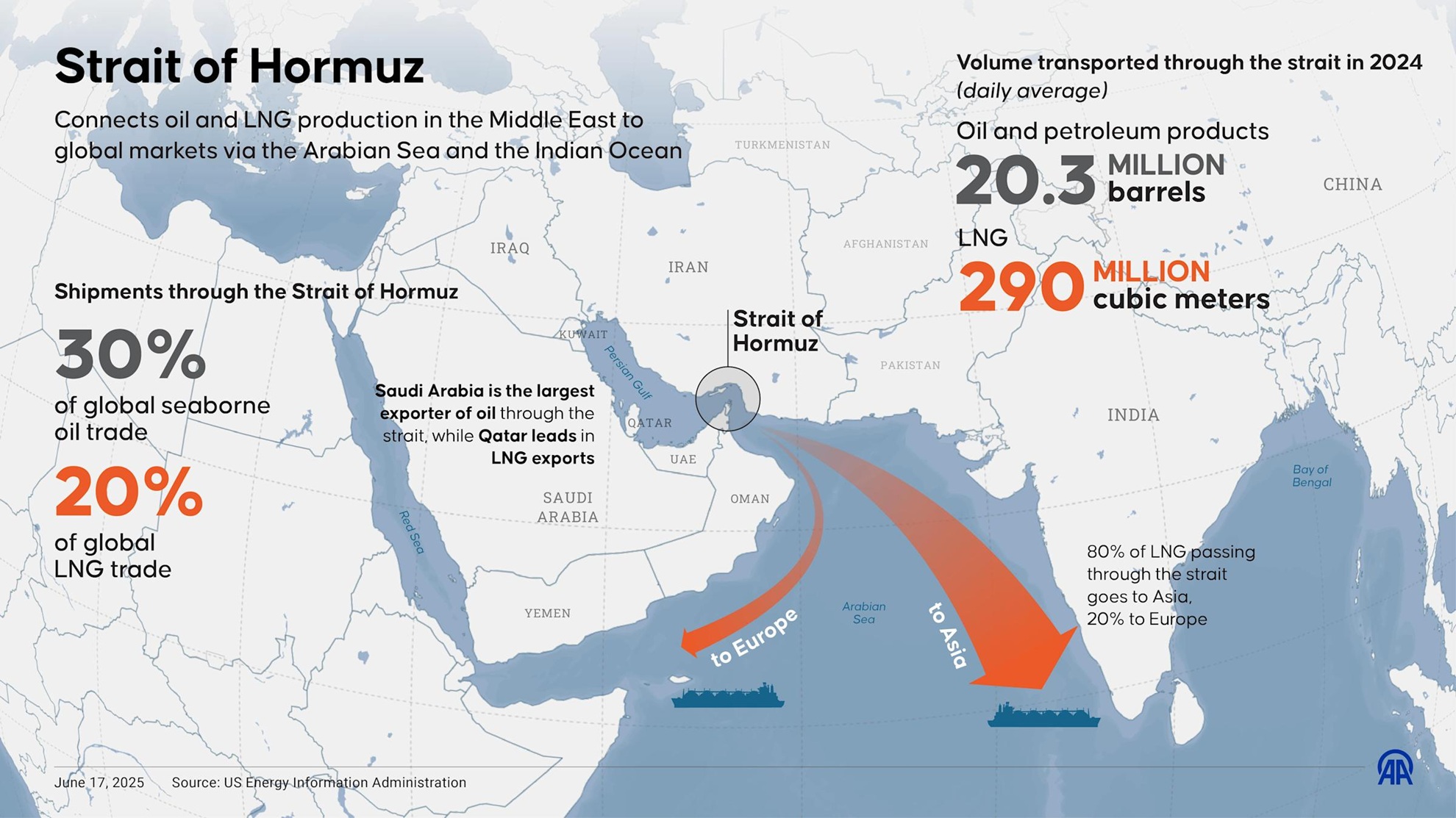
vs. Strait of Hormuz daily flow (20M bbl/day)
6.75 daysof Hormuz throughput covered
6.75 days
0
5
10
15
20
25
30 days
vs. Global oil consumption (104M bbl/day)
1.3 daysof world demand covered
1.3 days
0
5
10
15
20
25
30 days
vs. US Strategic Petroleum Reserve release (1M bbl/day)
135 daysof full SPR release pace covered
135 days — but SPR exists to replace this role
0
5
10
15
20
25
30 days
135M
idle barrels on tankers (midpoint of 120–150M range)
~33%
of daily Hormuz flow that is idle storage, not transit
<31 hrs
is all idle storage against global daily consumption
Indicative market trajectories based on disruption severity
Scenarios for the weeks ahead
1–2 WEEKS
Ceasefire catch-up
Markets face catch-up repricing. Brent could consolidate in the US$105–US$115 range as risk premia unwind. Brent may trade lower (US$95–US$110) if strategic stocks bridge the temporary shortfall.
2–4 WEEKS
Infrastructure blitz
Shifts to structural supply shock. Brent moving toward US$150–US$200 cannot be ruled out. This is the stagflation trigger where energy costs constrain central bank flexibility.
STRUCTURAL
Geopolitical floor
Iran's transit fee demand creates a permanent input cost. The pre-crisis price structure (US$60–US$70) may not return, embedded in insurance and freight rates.
Critical Threshold
US$120 remains the level at which energy inflation becomes a direct Federal Reserve policy problem.