

ข่าวสารตลาด & มุมมองเชิงลึก
ก้าวนำตลาดด้วยมุมมองเชิงลึกจากผู้เชี่ยวชาญ ข่าวสาร และการวิเคราะห์ทางเทคนิค เพื่อเป็นแนวทางในการตัดสินใจซื้อขายของคุณ.

ฤดูกาลรายได้ของสหรัฐฯ ในเดือนเมษายนกำลังลงสู่ตลาดที่ต้องการมากกว่าเรื่องราวที่ดี เจพีมอร์แกน ได้ตั้งแถบสูงแล้วด้วยผลลัพธ์ที่แข็งแกร่ง และตอนนี้ความสนใจกำลังเปลี่ยนไปที่ห้องเครื่องยนต์ของ S&P 500: โครงสร้างพื้นฐาน AIสามบริษัทอยู่ในศูนย์กลางของเรื่องนั้น
ทำไมหน้าต่างรายได้นี้จึงมีความสำคัญสำหรับ AI
Microsoft, Alphabet และ NVIDIA ไม่ได้เป็นเพียงผู้เข้าร่วมในวงจร AI เท่านั้น แต่พวกเขากำลังสร้างสถาปัตยกรรมทางกายภาพและซอฟต์แวร์ที่ บริษัท อื่น ๆ พึ่งพา ได้แก่ ชิปพื้นที่คลาวด์โมเดลและเครื่องมือหากการใช้จ่ายนี้จะส่งผลตอบแทน สัญญาณแรกอาจเริ่มปรากฏในผลลัพธ์รายไตรมาสในช่วงสองสามสัปดาห์ข้างหน้า
แต่ละบริษัทแสดงถึงการทดสอบที่แตกต่างกัน
- ไมโครซอฟท์: การปรับใช้ AI ขององค์กรจะแปลเป็นการขยายรายได้และการขยายมาร์จิ้นหรือไม่
- ตัวอักษร: ไม่ว่าจะเป็นเจ้าของสแต็กเต็มรูปแบบตั้งแต่ชิปไปจนถึงคลาวด์ไปจนถึงการแจกจ่ายเป็นข้อได้เปรียบที่ทนทานหรือเป็นเพียงตำแหน่งที่มีราคาแพงในการป้องกัน
- เอ็นวิเดีย: ไม่ว่าวงจรฮาร์ดแวร์ยังคงอยู่ เร่งความเร็วหรือเริ่มปรับระดับ
ในปี 2026 คำถามไม่ใช่อีกต่อไปว่าการลงทุน AI กำลังเกิดขึ้นหรือไม่ แต่ภาระผูกพันด้านเงินทุนนั้นมีนัยสำคัญและระบุไว้ต่อสาธารณะแล้วคำถามคือการใช้จ่ายนั้นสร้างผลตอบแทนอย่างรวดเร็วพอที่จะพิสูจน์ขนาดของการเดิมพันเหล่านั้นหรือไม่

NIO Q2 results have arrived NIO Inc. (NIO) reported its unaudited second quarter financial results on Wednesday. The Chinese electric vehicle maker reported revenue of $1.538 billion for the quarter, beating analyst estimate of $1.458 billion. Loss per share reported at -$0.20 per share vs. -$0.16 loss per share expected.
William Bin Li, founder, chairman and CEO of the EV company commented on NIO’s performance in Q2: ''We delivered 25,059 vehicles in the second quarter of 2022, representing a growth of 14.4% year-over-year despite the COVID-19 related challenges. With the teams’ concerted efforts, our deliveries started to recover and achieved 10,052 and 10,677 units in July and August, respectively." "The second half of 2022 is a critical period for NIO to scale up the production and delivery of multiple new products. The ES7, our first mid-large five-seater smart electric SUV based on NIO Technology 2.0 (NT2.0), has become a new favorite of the market with its superior performance, comfort and digital experience.
We witnessed a robust order inflow for the ES7 and started its deliveries at scale in August. We also look forward to starting the mass production and delivery of the ET5 in late September. With the compelling product portfolio and well-established brand awareness, NIO will attract a broader user base and embrace robust growth in the coming quarters," Li concluded.
NIO has delivered a total of 238,626 vehicles as of August 31, 2022. The company expects deliveries of between 31,000 to 33,000 in Q3 and revenue of between $1.913 billion and $2.030 billion. NIO Inc. (NIO) chart The stock was up by around 3% at the market open in the US on Wednesday, trading at $17.88 a share.
Here is how the stock has performed in the past year: 1 month -14.66% 3 months -16.05% Year-to-date -45.99% 1 year -55.14% NIO price targets B of A Securities $26 UBS $32 Mizuho $60 Morgan Stanley $34 Barclays $34 Deutsche Bank $70 Goldman Sachs $56 NIO Inc. is the 15 th largest automaker in the world with a market cap of $28.62 billion. You can trade NIO Inc. (NIO) and many other stocks from the NYSE, NASDAQ, HKEX and the ASX with GO Markets as a Share CFD. Sources: NIO Inc., TradingView, MarketWatch, Benzinga, CompaniesMarketCap

Brent Crude and West Texas Intermediate Oil both fell to their lowest levels since January as fresh recession fears swept the market. Brent dropped to $87 a barrel and WTI to $81. The prices dropped following OPEC’s decision to cut the production by 100,000 barrels a day of supply from October.
In recent months with the Russian and Ukraine conflict raging, OPEC had to lift production as supply dipped. However, with the decreasing health of the global economy and a incredibly strong US dollar demand for overseas oil has dipped. Poor economic data from China and its Covid zero strategy has also pushed concerns of weaker demand.
In fact, China’s crude oil important dropped by 9.4% from a year earlier signalling the slowdown in demand. Furthermore, with the US federal reserve expected to remain hawkish until inflation is back to a sustainable level, in the short term there is little resistance in the way of the US dollar continuing to grind its way higher, further pressuring the price of oil. Whilst the current dip may provide some relief for consumers, with uncertainty from the Kremlin and Putin potentially capping their energy exports, the short term volatility will likely continue.
As it can be seen from the charts below, both WTI and Brent have broken down through their key support levels. The price may struggle to fall lower in the immediate short term and may need to consolidate in the short term before pushing lower again.
With central banks aggressively hiking interest rates to combat inflation, one specific country stands alone in maintaining a dovish stance. The country is Japan, and the consequence of the Central Bank of Japan’s ultra-dovish policy has been a massive weakening of its currency. Against almost all other currencies the JPY has been depreciating aggressively.
Specifically, the USD/JPY and the NZD/JPY are shaping as potentially trading opportunities. Both trading opportunities are largely based on a technical breakout as opposed to a pure fundamental breakout. NZD/JPY This currency pair is forming into a symmetrical triangle pattern.
Importantly the price has been contracting and the range getting smaller. This shows that the price is reaching an equilibrium point between buyers and sellers. However, at some point and the price will not be able to contract further and will have to break out either to the upside or the downside.
The general rule of a symmetrical triangle is to wait until the price breaks before taking a position because the price has not indicated if it will break upward or downward. In addition, the RSI indicates a similar pattern showing consolidation in the same type of triangle. Therefore, a break of this RSI triangle may correlate and support a break out on the actual price.
USD/JPY This pair has seen an even more extreme move upward. After pulling back to the recent support at the 23.6% Fibonacci retracement level, the price has risen again and is looking to test the highs at 139.5 JPY. In order to find a new target the chat needs to be zoomed out to the monthly in order to see the next resistance point which is at 145JPY.
This would also take the price to almost 25 year highs. With more economic data to come out of the USA later this week.
Baidu Inc. (BIDU) reported its unaudited Q2 results on Tuesday. The Chinese technology company topped both revenue and earnings per share estimates for the quarter. Revenue reported at $4.424 billion for Q2 (down by 5% year-over-year) vs. $4.395 billion expected.
Earnings per share at $2.36 per share for the quarter vs. $1.59 per share estimate. Robin Li, CEO of Baidu: "Despite a challenging macro environment caused by Covid-19, Baidu Core generated RMB23.2 billion in revenues in the second quarter, while Baidu AI Cloud revenues maintained rapid growth momentum of 31% year over year and 10% quarter over quarter." "Apollo Go further solidified its position as the world's largest autonomous ride-hailing service provider. Apollo Go completed 287K rides in the second quarter, and accumulated one million rides on July 20, becoming an important alternative means of people's everyday travel in the Yizhuang region of Beijing.
Moreover, in a momentous landmark, Apollo Go became the first provider to offer fully driverless ride-hailing services – i.e. completely without human drivers present in the car - on open roads in Chongqing and Wuhan, allowing us to further scale up our operations at an accelerated pace," Li added. "Baidu Core delivered a non-GAAP operating margin of 22% in the second quarter, up from 17% in the first quarter of 2022, as we continued to optimize our costs and enhance operational efficiency," said Rong Luo, CFO of the company. "Going forward, we remain committed to quality revenue growth and sustainable business models," Luo concluded. Baidu Inc. (BIDU) chart Shares of Baidu were down by around 7% on Tuesday at $137.49 per share. Here is how the stock has performed in the past year: 1 month +2.82% 3 months -1.72% Year-to-date -7.29% 1 year -12.15% Baidu price targets Benchmark $270 Citigroup $223 Barclays $235 JP Morgan $125 Mizuho $285 HSBC $180 Baidu Inc. is the 334 th largest company in the world with a market cap of $47.08 billion.
You can trade Baidu Inc. (BIDU) and many other stocks from the NYSE, NASDAQ, HKEX and the ASX with GO Markets as a Share CFD. Sources: Baidu Inc., TradingView, MetaTrader 5, Benzinga, CompaniesMarketCap
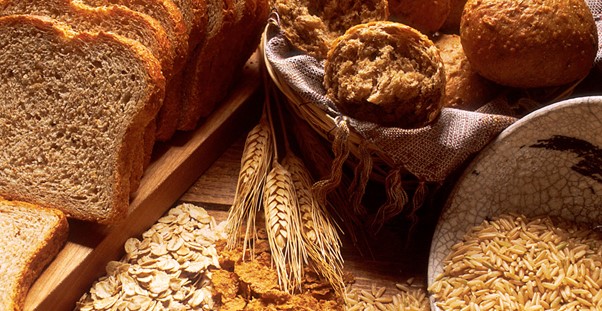
The price of wheat is finally starting to show positive signs after an aggressive sell off that has been ongoing since May 2022. There is hope that the price of the commodity may begin to climb again with the price finally finding some support. The price has been impacted by growing fears that production may slip may increasing volatility and increasing in price.
Pressure from Global Warming has effected the production/farming of the grain reducing supply. India in particular which is the second largest producer of wheat, has suffered from rising heat levels with its production dropping by 3% in 2021/22. Furthermore, the constant ambiguity surrounding the Russian and Ukraine crisis still has the potential move the price even higher adding to a potential supply crunch.
Technical Analysis The Price chart for wheat shows how the price ran during the initial stages of the Russian and Ukraine crisis, before failing to breakout and entering an aggressive downtrend. This shift is essentially a long-term reversion to the mean moving back towards the 200-day average and prior long term supports. The price action is a common follow on from sharp and fast rises in prices.
The price has now settled and consolidating between $770-$850 and importantly broken out of the downtrend. Adding to the evidence for a potential reversal is that there is a divergence between the RSI and the current price. As it can be seen, the RSI is itself in an upward channel and has crossed through the 50 level.
This can be compared to the actual price which is still consolidating. Divergences can be an early indicator that a reversal is about to occur. This current price action is showing the potential for a bounce based on the factors discussed above and presents a potential long trade with a risk reward of around 2.5:1.
For this trade, the recent resistance point of $940 can be the first target. If the price can pass through this level, it may be able to reach $970. Placing a stop loss below the recent low wick at 830 provides solid risk management in case the price goes in a different direction.

Wheat Trading Opportunities Wheat is a well-known soft commodity that is vital for any kind of bread product. It also has important uses for the feedstock for cattle which is vital in economies with large agricultural sectors. The supply and demand for wheat can be volatile with changes occurring for a multitude of different reasons.
The most recent spike in price was caused by the Russian and Ukraine Crisis. The soft commodity saw a large spike largely due to the economic sanctions placed on Russia and supply chain pressures that the war caused in Ukraine. Both countries are large exporters of wheat with Ukraine producing about a fifth of the world’s high-grade wheat and 7% of all wheat across the world.
Therefore, the supply shock had a large effect on the supply available driving up the price. Some of the other countries that produce the bulk of the worlds supply include China, the USA, Canada, Australia, and India were able to benefit from the higher prices. A strong USD Like all commodities, wheat is quoted in USD.
This means that when the USD is strong, the price of the commodity becomes weaker because the producer must sell their produce for less. Due to recent market volatility the USD has risen as investors have looked to the USD for safety. This has in turn negatively affected the price of wheat The Price of Oil The price of oil plays a role in the overall price of wheat.
This is because oil is an important input cost for wheat. Oil is needed for both the transportation and the actual farming of wheat. As the price of oil increases the costs must then be offset by the wheat producers who then raise their resale price.
Therefore, when forecasting what the price of wheat may do in the future, assessing the future of the price of oil can be a helpful tool. Emerging economies Countries with developing economies tend to be higher importers and consumers of wheat. In addition, countries in the Middle East and Africa import lots of wheat because they do not have an environment that is conducive to producing wheat.
For instance, in countries in the desert such Egypt where there is little water, and it is exceptionally dry such as Egypt very little wheat is produced. This explains why Egypt is one of the highest exporters of wheat and if the demand from these countries it would likely impact on the overall price. Technical Analysis The price chart of wheat tells an important story.
It can be observed that the wheat futures initially spiked at the beginning of the war in Ukraine as the market reacted to the initial supply shock. The price then moved into a tight consolidation tightly before breaking out towards the highs. However, this breakout failed, and was unable to rise above the key resistance level at $1354.
The price of wheat then entered a downward trending channel where it currently remains. The price has also broken down below the 200 Day Moving Average which does not bode well for bullish moves in the short term. Before this break down, wheat had not fallen substantially below the 200-day moving average since June 2020.
On the other hand, the price is currently sitting in the top half of the channel. The price may be able to break out of the channel to the upside. In addition, it is also sitting in area of long-term support between 750-850 USD.
Wheat Future Contract CFD’s can now be traded on MT5 on GoMarkets platforms