The Buraeu of Labor Statistics have released the latest jobs report for September. Let’s take a look at the latest numbers. The total non-farm payroll employment increased by 134,000, the U.S.
Bureau of Labor Statistics reported today versus the forecast of 185,000. Biggest job gains were in professional and business services, in health care, and in transportation and warehousing. The unemployment rate declined by 0.2% to 3.7% in September better than the forecast of 3.8%.
Worth pointing out that the latest unemployment rate is the lowest level for 49 years. The number of unemployed people decreased by 270,000 to 6 million. Average hourly earnings dropped from 2.9% to 2.8% as anticipated.
The reaction Initially we saw some weakness in the US dollar as the latest figures were released, however, since then the Dollar has recovered some losses. Average hourly earnings dropped from 2.9% to 2.8% as anticipated. USD/JPY Hourly Chart GBP/USD Hourly Chart EUR/USD Hourly Chart This article is written by a GO Markets Analyst and is based on their independent analysis.
They remain fully responsible for the views expressed as well as any remaining error or omissions. Trading Forex and Derivatives carries a high level of risk. Sources: Bloomberg, Go Markets MT4
By
Klavs Valters
Account Manager, GO Markets London.
The information provided is of general nature only and does not take into account your personal objectives, financial situations or needs. Before acting on any information provided, you should consider whether the information is suitable for you and your personal circumstances and if necessary, seek appropriate professional advice. All opinions, conclusions, forecasts or recommendations are reasonably held at the time of compilation but are subject to change without notice. Past performance is not an indication of future performance. Go Markets Pty Ltd, ABN 85 081 864 039, AFSL 254963 is a CFD issuer, and trading carries significant risks and is not suitable for everyone. You do not own or have any interest in the rights to the underlying assets. You should consider the appropriateness by reviewing our TMD, FSG, PDS and other CFD legal documents to ensure you understand the risks before you invest in CFDs. 免责声明:文章来自 GO Markets 分析师和参与者,基于他们的独立分析或个人经验。表达的观点、意见或交易风格仅代表作者个人,不代表 GO Markets 立场。建议,(如有),具有“普遍”性,并非基于您的个人目标、财务状况或需求。在根据建议采取行动之前,请考虑该建议(如有)对您的目标、财务状况和需求的适用程度。如果建议与购买特定金融产品有关,您应该在做出任何决定之前了解并考虑该产品的产品披露声明 (PDS) 和金融服务指南 (FSG)。
As tariff shocks collide with a ten year extreme in oil positioning, the margin for error is zero. See the technical markers and safe haven pivots defining the current risk environment.
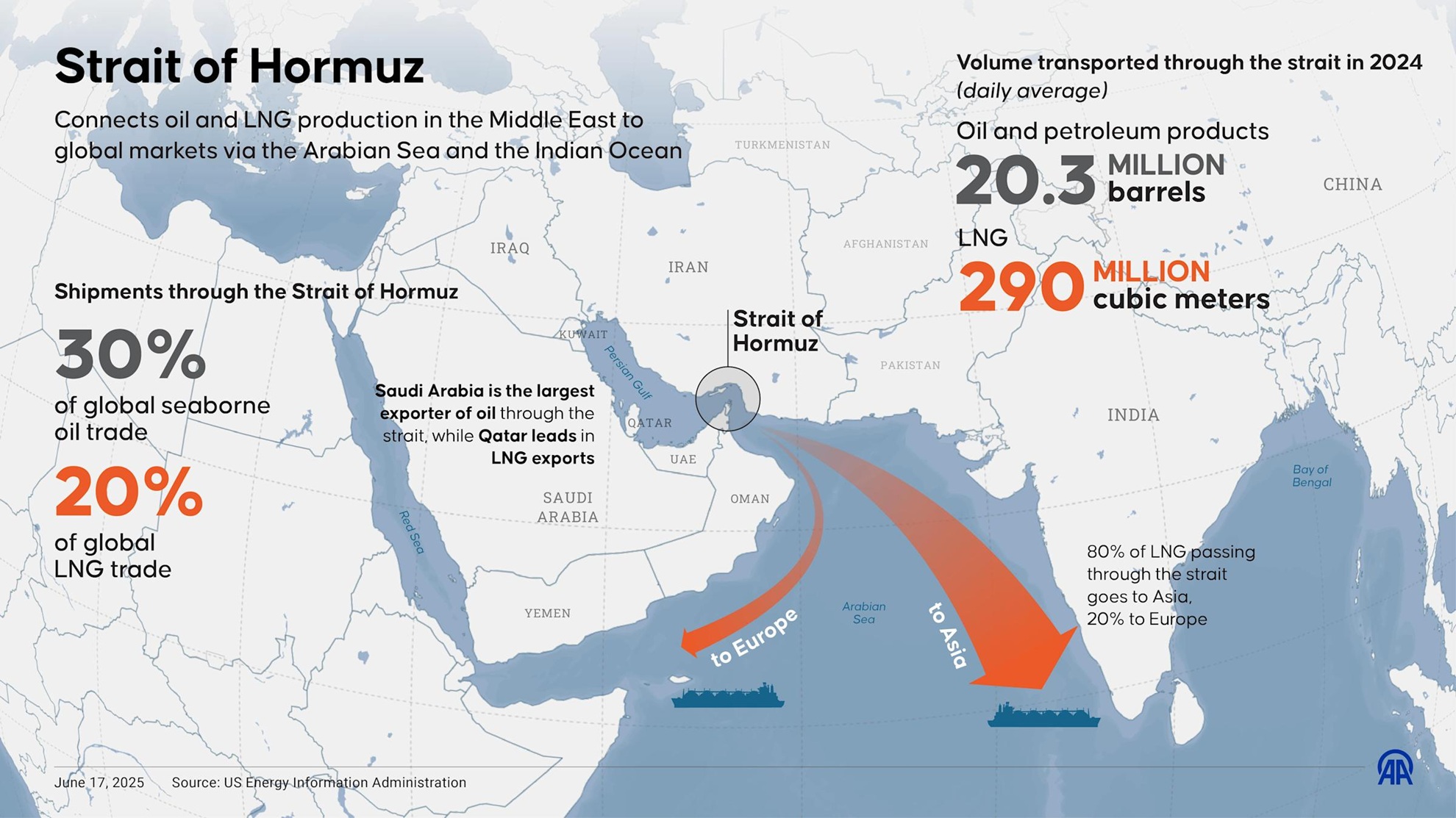
135M idle barrels — days of cover against each demand benchmark
vs. Strait of Hormuz daily flow (20M bbl/day)
6.75 daysof Hormuz throughput covered
6.75 days
0
5
10
15
20
25
30 days
vs. Global oil consumption (104M bbl/day)
1.3 daysof world demand covered
1.3 days
0
5
10
15
20
25
30 days
vs. US Strategic Petroleum Reserve release (1M bbl/day)
135 daysof full SPR release pace covered
135 days — but SPR exists to replace this role
0
5
10
15
20
25
30 days
135M
idle barrels on tankers (midpoint of 120–150M range)
~33%
of daily Hormuz flow that is idle storage, not transit
<31 hrs
is all idle storage against global daily consumption
Indicative market trajectories based on disruption severity
Scenarios for the weeks ahead
1–2 WEEKS
Ceasefire catch-up
Markets face catch-up repricing. Brent could consolidate in the US$105–US$115 range as risk premia unwind. Brent may trade lower (US$95–US$110) if strategic stocks bridge the temporary shortfall.
2–4 WEEKS
Infrastructure blitz
Shifts to structural supply shock. Brent moving toward US$150–US$200 cannot be ruled out. This is the stagflation trigger where energy costs constrain central bank flexibility.
STRUCTURAL
Geopolitical floor
Iran's transit fee demand creates a permanent input cost. The pre-crisis price structure (US$60–US$70) may not return, embedded in insurance and freight rates.
Critical Threshold
US$120 remains the level at which energy inflation becomes a direct Federal Reserve policy problem.
We have spent the last three instalments of this series mapping the plumbing of the 2026 economy: the banks that anchor the capital, the utilities that supply the electrons, and the chipmakers building the silicon. As the April reporting season moves into its final act, attention shifts to the front door.
Meta, Amazon and Apple sit at the point where the AI buildout meets everyday consumers and businesses.
In 2026, the question is no longer only who can build the data centres. It is who can turn those investments into sustainable, high-margin profit. With energy markets calmer after the recent ceasefire, technology valuations have had some room to breathe. Now the market wants evidence.
Why return on investment is now the focus
A hard divide, sometimes called the “Great Dispersion”, is opening between companies that enable AI and companies that monetise it. Meta and Amazon are at the centre of a massive capital expenditure (capex) cycle, against an estimated industry-wide spend of roughly US$650 billion to US$700 billion in 2026.
That is why return on investment (ROI) metrics are front of mind. Is Meta’s AI-driven ad targeting strong enough to justify its spending programme? Is Amazon Web Services (AWS) re-accelerating fast enough to support the custom silicon push? Can Apple hold its premium valuation by showing the iPhone 17 cycle is real, even in a more difficult Chinese market?
IMPORTANT: REPORTING SCHEDULES CAN CHANGE WITHOUT NOTICE. REPORTING DATES AND RELEASE TIMES ARE FROM COMPANY INVESTOR RELATIONS CALENDARS WHERE MARKED CONFIRMED; OTHERWISE THEY ARE GO MARKETS ESTIMATES. CONSENSUS EPS, REVENUE AND ANALYST-RANGE DATA ARE FROM THIRD-PARTY MARKET CONSENSUS SOURCES, AS OF 20 APRIL 2026 (AEST). COMPANY GUIDANCE, BACKLOG AND OPERATING METRICS ARE FROM THE LATEST COMPANY FILINGS OR RESULTS PRESENTATIONS UNLESS STATED OTHERWISE. FIGURES AND SCHEDULES MAY CHANGE WITHOUT NOTICE.
$META| Q1 2026 REPORTING PERIOD
Meta Platforms, Inc.
NASDAQ | Technology/Advertising | 29 Apr 2026
✓ CONFIRMED
Global Release Countdown (AMC)
00:00:00:00
Consensus EPS
US$6.69
Consensus Revenue
US$55.4bn
AUSTRALIA (AEST)30 Apr | 6:05 am
UNITED STATES (EDT)29 Apr | 4:05 pm
Market intelligence: $META
Analysis: Meta price drivers and scenarios
Ad click improvement (est.)
+3–5%
From AI-driven targeting
2026 capex estimate
~US$135bn
Market estimate range
Silicon strategy
MTIA 2nm
Broadcom co-development
Strategy note
What is MTIA 2nm? This is Meta's "home-grown" AI chip. The 2nm refers to ultra-advanced, high-efficiency technology. By building their own silicon with Broadcom, Meta aims to slash their massive electricity bills and end their total reliance on buying expensive NVIDIA hardware. If this works, it protects Meta's profit margins even if they keep spending billions on AI.
Meta has moved from its "Year of Efficiency" into what CEO Mark Zuckerberg calls the "Era of Personal Superintelligence". By April 2026, AI appears to have sharpened the company’s core advertising engine, with some reports suggesting ad click rates rose by around 3% to 5%. But the bigger strategic issue is Meta’s multi-year Broadcom partnership to co-develop custom 2nm MTIA chips, with the aim of reducing reliance on NVIDIA and lowering operating costs over time. The risk is that Meta could beat on earnings and still disappoint if management points to higher spending and a longer payoff period. The real question is whether efficiency gains are keeping pace with the capital expenditure (capex) bill.
Call focus and key signals
The Avocado AI model
Watch for ad click improvements tied to the "Avocado" AI model deployment, currently estimated to be lifting rates by up to 5%.
Signal: Monetisation efficiency
MTIA rollout status
Updates on the custom 2nm MTIA chip rollout with Broadcom will indicate Meta's long term cost structure flexibility.
Watch: Infrastructure independence
Reality Labs losses
Evidence of Reality Labs loss stabilisation would reduce the persistent drag on the overall earnings story.
Watch: Operating loss trend
Capex vs efficiency
The real question for investors is whether efficiency gains are keeping pace with the significant capex bill.
Signal: Spending productivity
Sentiment analysis: Meta Platforms
Interactive scenario analysis: $META
Select earnings outcome
Productive cycle
Spending cycle becomes productive
EPS above US$7.10, double-digit ad growth, and clear early efficiency gains from MTIA. The market may interpret that as a sign the spending cycle is becoming more productive rather than simply more expensive.
EPS level
Above US$7.10
Ad growth
Double digit
Efficiency
MTIA gains
Reaction
Strong rally
Sources & Data Methodology
Sources: Reporting dates and release times are from company investor relations calendars where marked Confirmed; otherwise they are GO Markets estimates. Consensus EPS, revenue and analyst-range data are sourced from Bloomberg and Earnings Whispers, as at 20 April 2026 (AEST). Company guidance, backlog and operating metrics are sourced from the latest company filings or results presentations. Any scenario analysis reflects GO Markets analysis. Figures and schedules may change without notice.
Expanded Coverage
Beyond the chipmakers
As the "show me the money" year unfolds, discover how AI demand is impacting Tesla, NextEra, and Exxon.
Amazon is no longer just a retail story. It is increasingly a cloud and advertising business, with a thin-margin logistics network attached. In 2026, the narrative is centred on what reports have described as a roughly US$200 billion capex plan, aimed largely at building out AWS’s AI infrastructure.
$AMZN| Q1 2026 REPORTING PERIOD
Amazon.com, Inc.
NASDAQ | Technology/Retail | 29 Apr 2026
✓ CONFIRMED
Global Release Countdown (AMC)
00:00:00:00
Consensus EPS
US$1.69
Consensus Revenue
~US$177.7bn
AUSTRALIA (AEST) | ASIA30 Apr | 6:00 am | 4:00 am
US (EDT) | LATAM29 Apr | 4:00 pm | 2:00 pm
Market Intelligence: $AMZN
Analysis: Amazon price drivers and scenarios
AWS growth threshold
20% YoY
Market floor expectation
2026 Capex plan (est.)
~US$200bn
Largely AWS AI infrastructure
Custom silicon
Trainium 3 and 4
In-house AI chip pipeline
Amazon is no longer primarily a retail story. In 2026, the narrative centres on approximately US$200 billion in planned capex, directed largely at building out AWS's AI infrastructure. That is an extraordinary commitment, and the market is watching closely to see whether the returns are following. One metric matters most: AWS growth.
Key signals to watch
AWS growth rate
Anything materially below 20% YoY could reinforce the bear case that spending is running well ahead of returns.
Watch: AWS growth vs 20% floor
Trainium supply commitments
Early supply commitments for Trainium 3 and 4 would signal how quickly the transition to in-house chips is progressing.
Watch: Trainium 3 and 4 progress
Retail margins under tariff pressure
Management commentary on whether Section 122 tariff costs are being absorbed or passed on is vital for the non-AWS story.
Watch: Retail operating margin
Advertising segment momentum
Sustained growth here provides a high-margin earnings cushion if retail margins are squeezed by logistics or tariffs.
Watch: Advertising revenue growth
Sentiment Analysis · Amazon.com Inc.
Interactive scenario analysis: $AMZN
Select earnings outcome
Investment Landing
Spending cycle lands well
EPS above US$1.90 and AWS growth above 24% with firmer retail margins. The market interprets this as proof the massive investment cycle is delivering efficient returns.
EPS Level
Above US$1.90
AWS Signal
Above 24%
Retail Margin
Firmer
Reaction
Positive rally
Sources & Data Methodology
Sources: Reporting dates and release times are from company investor relations calendars where marked Confirmed; otherwise they are GO Markets estimates. Consensus EPS, revenue and analyst-range data are sourced from Bloomberg and Earnings Whispers, as at 20 April 2026 (AEST). Company guidance, backlog and operating metrics are sourced from the latest company filings or results presentations. Any scenario analysis reflects GO Markets analysis. Figures and schedules may change without notice.
Apple: quality still needs proof
Apple has looked like the defensive favourite in hardware, helped by record free cash flow (FCF) of US$43.64 billion and the strength of its Services segment. But the latest debate is whether that defensive status can turn back into growth. Third-party shipment data has indicated a roughly 20% rise in China for iPhone 17, challenging the idea that the market is already mature.
$AAPL| Q2 FY2026 REPORTING PERIOD
Apple Inc.
NASDAQ | Consumer Technology | 30 Apr 2026
✓ CONFIRMED
Global Release Countdown (AMC)
00:00:00:00
Consensus EPS
US$1.91
Consensus Revenue
~US$109.0bn
AUSTRALIA (AEST) | ASIA01 May | 6:30 am | 4:30 am
US (EDT) | LATAM30 Apr | 4:30 pm | 2:30 pm
Market intelligence: $AAPL
Analysis: Apple price drivers and scenarios
Free cash flow (FCF)
US$43.6bn
Record, prior period
Services run-rate target
~US$30bn
Quarterly revenue approach
China iPhone 17 shipments
+~20%
Third-party data estimate
Apple has been the defensive favourite in consumer hardware, backed by record free cash flow of US$43.6 billion and the resilience of its Services segment. In 2026, the debate is whether that defensive status can start to look like genuine growth again. Third-party shipment data has pointed to a roughly 20% rise in China for iPhone 17, pushing back against the idea that the market there is already fully mature. Apple is still widely seen as a quality print, but expectations are higher now. Margin resilience alone is no longer enough. The market wants evidence that Apple Intelligence, the company’s on-device AI platform, can extend the upgrade cycle and support more recurring, high-margin Services revenue over time.
Key signals to watch
iPhone 17 demand in China
China remains the most closely watched variable. Third-party data has pointed to growth of around 20%, but earnings will provide the first company-sourced data point.
Watch: China revenue growth
Services revenue trajectory
Services is approaching a US$30 billion quarterly run rate and carries structurally higher margins. Further acceleration reduces reliance on iPhone cycle volatility.
Watch: Services revenue vs US$30bn
Apple Intelligence rollout
On-device AI is a key upgrade catalyst. Management commentary on adoption, features and international timing will shape refresh cycle expectations.
Watch: Apple intelligence milestones
Gross margin
Apple guided to a 48% to 49% range. Holding near the top signals product mix strength. A result below 48% raises questions about cost pressure.
Watch: Gross margin vs 48% to 49%
Sentiment analysis: Apple Inc.
Interactive scenario analysis: $AAPL
Select report outcome
Growth support
Support for growth narrative
EPS above US$1.94, firmer China iPhone 17 data and gross margin above 49%. The market may interpret that as support for the higher-quality growth narrative and validate the thesis that Apple Intelligence is beginning to drive a meaningful upgrade cycle.
EPS level
Above US$1.94
China demand
Firmer
Gross margin
Above 49%
Reaction
Bullish move
Sources & Data Methodology
Sources: Reporting dates and release times are from company investor relations calendars where marked Confirmed; otherwise they are GO Markets estimates. Consensus EPS, revenue and analyst-range data are sourced from Bloomberg and Earnings Whispers, as at 20 April 2026 (AEST). Company guidance, backlog and operating metrics are sourced from the latest company filings or results presentations. Any scenario analysis reflects GO Markets analysis. Figures and schedules may change without notice.
Thematic risks
What could shift the picture
Three risks could change the narrative, regardless of how the numbers print.
1. Spending without visible returns
Meta and Amazon are both running enormous capex programmes, with payoff periods that stretch well beyond a single quarter. If either company delivers an in line or weaker result while also lifting full year spending guidance, the market may start to see the gap between investment and return as a structural issue rather than a temporary one. That would matter for the sector as a whole, not just for one stock.
2. China as a variable, not a constant
Apple's China story has shown some resilience in third party data, but it remains sensitive to trade policy, consumer confidence and local competition. Any signal from management that demand is softening faster than expected, or that local rivals are gaining meaningful share in the mid range and premium segments, could reset the earnings growth outlook more quickly than consensus currently assumes.
3. The K-shaped consumer backdrop
In a market where higher income consumers are holding up while lower income groups remain under pressure, ad spending patterns and device upgrade cycles can diverge sharply from headline averages. If Meta's ad pricing weakens because smaller businesses pull back, or if Apple's upgrade cycle is concentrated within a narrower demographic, results could disappoint even with broadly stable macro conditions.
Note: These thematic risks may influence sector wide risk appetite independently of headline EPS results.
The bottom line
The 2026 reality check
As this earnings season moves towards its close, the story is shifting away from survival and towards operational execution in the intelligence era.
$META
AI ad efficiency is facing its biggest test yet. Can the Broadcom silicon bet start to show up in margins?
$AMZN
AWS re-acceleration remains the critical signal. A US$200 billion capex push needs a growth rate to match.
$AAPL
Quality still needs proof. Apple Intelligence has to show it can extend the upgrade cycle, not just refresh it.
For Meta, Amazon and Apple, the test is whether heavy investment in silicon, models and infrastructure is turning into measurable cash flow and durable margins. In a more uneven economy, the market appears to be rewarding companies that can show real demand and clearer monetisation. The earnings numbers matter, but management commentary on the return on that investment may matter more.
Your next earnings setup starts here
Stay ahead of major beats, misses, and market surprises. Log in to your terminal, open a new account, or explore our dedicated earnings academy.